
Migration in Asia
Navigating Complexity and Change in the 21st Century

Migration has long shaped the societies, economies, and politics of Asia. In the 21st century, the region’s migration landscape is more dynamic and complex than ever before, reflecting profound economic, social, environmental, and geopolitical transformations. This article explores the multi-layered realities of migration in Asia today, examining its diverse drivers, changing patterns, and the challenges that lie ahead.
The Dynamism and Scale of Asian Migration
Internal and International Flows
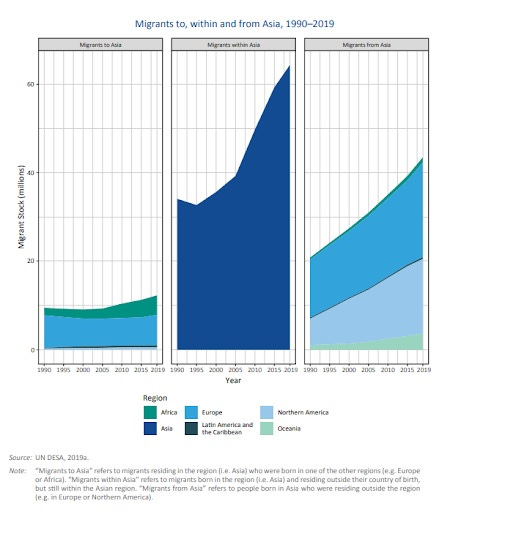
Asia is home to some of the world’s most significant internal and international migration flows. According to research, an estimated 27–31 million people from the Asia-Pacific region have changed their country of residence every year in recent times. These flows include both intra-regional movements—within Asia and the Pacific—and outflows to other continents.
A key feature is the interplay between internal migration (rural-to-urban, interprovincial, etc.) and international migration. In countries like China, massive internal migrations drive economic growth in urban coastal areas while also creating new social and demographic challenges. Meanwhile, cross-border movements range from labour migration to forced displacement due to conflict, environmental change, or economic hardship.
Heterogeneity and Complexity
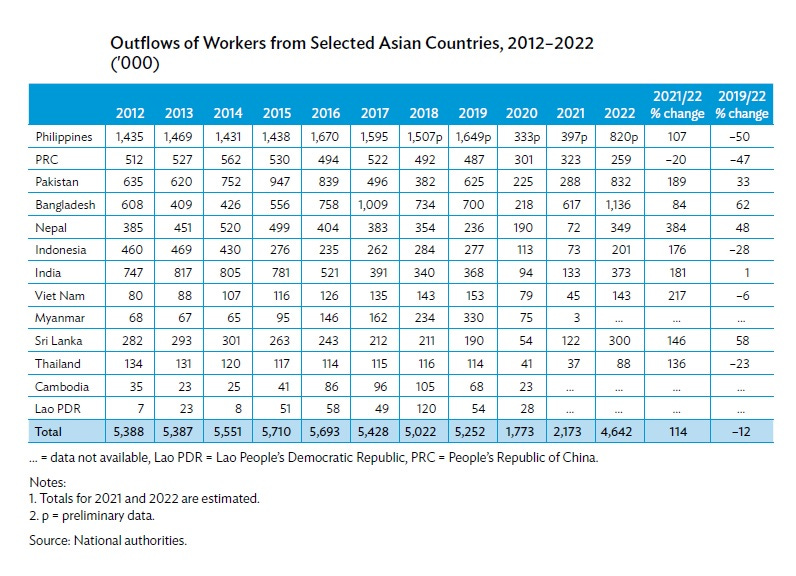
Asia’s migration is characterised by extraordinary diversity. Countries such as Bangladesh, Cambodia, and the Philippines are primarily sources of migrants, often driven by poverty, unemployment, and the lure of better opportunities abroad. Conversely, countries like Japan, Singapore, South Korea, and Taiwan have become top destinations, grappling with ageing populations and labour shortages. Middle-income countries—including India and China—simultaneously experience significant inflows and outflows of people.
Within this context, migration is not a simple movement from “sending” to “receiving” countries. Instead, it has become a tangled web of circular, return, and onward migration, often with blurred distinctions between regular and irregular statuses.
Key Drivers of Migration in Modern Asia
Economic Opportunity and Labour Mobility
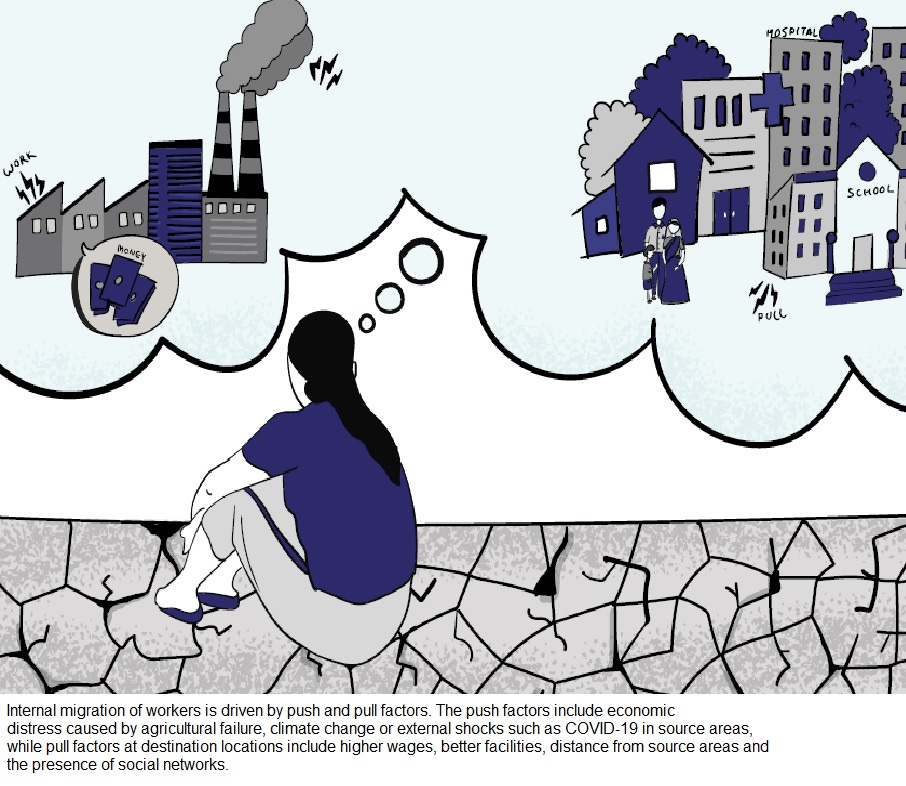
Economic disparity remains a core driver. Many Asian economies rely on labour migration to fuel growth or fill workforce gaps. Low-skilled labour migration, notably among women, has become a dominant feature, giving rise to specialised subfields such as domestic worker migration studies. Highly skilled professionals and students are also a growing segment, with China now the top source for international students and investor migrants worldwide.
Demographic Changes
Demographic shifts strongly shape regional migration. Countries like Japan, South Korea, and Singapore face rapidly ageing populations and declining birth rates, creating acute labour shortages that drive demand for foreign workers and spur debates over social integration. In contrast, young populations in South and Southeast Asia continue to seek better livelihoods through migration.
Climate Change and Environmental Stress
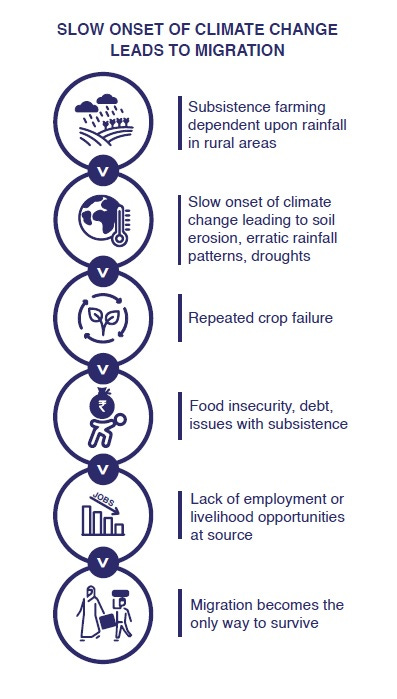
Climate change is increasingly central to migration dynamics in Asia. Southeast Asia alone accounted for over 30% of all disaster-induced displacement in the region between 2010 and 2021. Extreme weather events, slow-onset disasters, and environmental degradation are expected to further intensify pressures for both internal and cross-border migration, especially in vulnerable countries like Bangladesh and the low-lying Pacific islands. Policymakers are beginning to recognise the linkages between labour mobility and climate adaptation, though coherent responses remain in early stages.
Political Instability and Conflict
Conflict-induced migration remains a challenge in parts of Asia. Past legacies, such as the Cold War refugee flows from Vietnam, Cambodia, and Laos, continue to affect current migration networks and policymaking. Ongoing instability in Afghanistan and Myanmar, alongside more recent crises, fuels refugee movements across borders, often into countries that lack established asylum regimes.
New Patterns and Forms in the 21st Century
Gendered Migrations
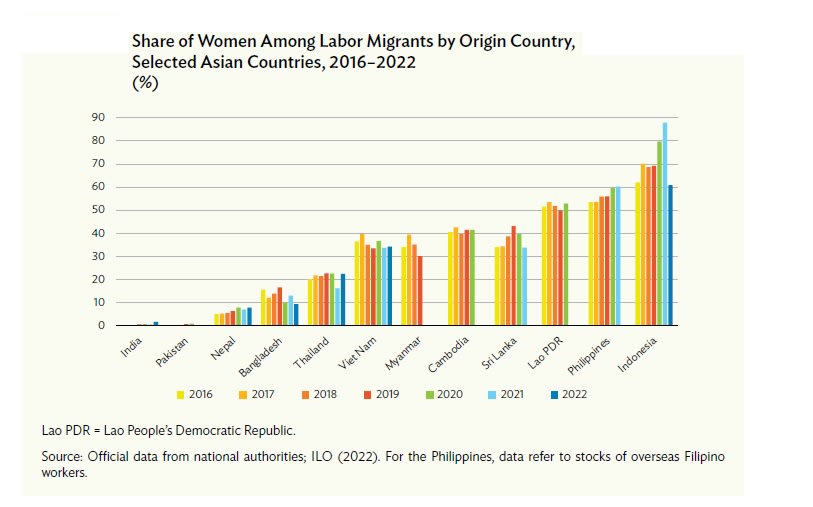
Migration in Asia has become markedly gendered, especially in sectors such as domestic work and caregiving, which are dominated by women. This has led to the so-called "feminisation of migration," raising both opportunities for empowerment and new vulnerabilities, particularly for those navigating low-wage, precarious labour markets abroad.
Marriage and Family Migration
Another notable trend involves “marriage migration,” where women from less-developed parts of Asia marry men in richer countries such as South Korea or Japan. These movements create complex, transnational family structures and sometimes raise issues related to integration, exploitation, and citizenship.
Family dynamics are also shaped by temporary and serial migration, with parents leaving behind children for years at a time to work abroad, creating unique social and emotional challenges for the so-called “left-behind” families.
High-Net-Worth Migration
Not all migration in Asia is driven by desperation or necessity. The rise of wealthy Asian individuals—particularly from China—has transformed “investment migration” into a significant trend, with affluent migrants securing residency or citizenship abroad via investment schemes. This underscores the diversity of motivations and means among Asian migrants.
Migration Governance: Navigating Institutional and Social Complexity
Institutional Arrangements and Policy Gaps
Governance of migration in Asia is a fragmented and evolving patchwork. There is no unified regional framework for managing labour migration, refugee protection, or migrant welfare. National responses are often driven by domestic political, economic, and social imperatives, sometimes at odds with migrants' lived realities. Efforts to harmonise policies, protect migrants' rights, and integrate gender and climate considerations remain incomplete.
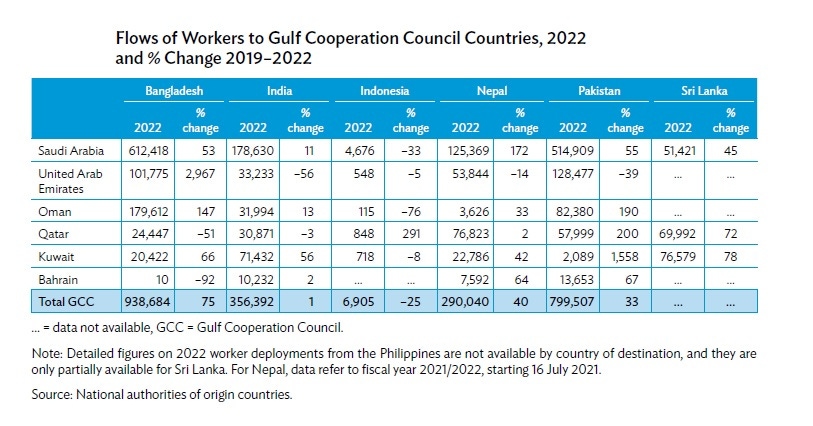
Countries such as Singapore, Malaysia, and those in the Gulf Cooperation Council rely heavily on temporary labour migration schemes, often restricting workers' rights and family life. Other states, like Japan, have gradually opened to immigration but struggle to balance economic needs with societal concerns over national identity and cohesion.
The Role of Civil Society and Diasporas
Civil society groups, migrant organisations, and diaspora networks increasingly influence migration policy, advocate for migrant rights, and provide essential services. Diaspora engagement by countries such as China and Vietnam highlights the importance of transnational ties for both sending and receiving countries and shifts questions about belonging and loyalty beyond traditional borders.
The Outlook: Towards Adaptation and Inclusion
As migration becomes more central to the region’s future, policymakers face the dual challenge of managing its opportunities—economic growth, demographic renewal, educational exchange—and mitigating its risks—exploitation, irregular movements, climate displacement, and social integration issues.
The region’s experience underlines that migration is neither a crisis nor a panacea: it is a constant, adaptive response to structural change. Effective policy will require greater regional cooperation, better data, and an unwavering focus on the rights and welfare of migrants.
Case Study: Migration from the Philippines – The Journey and Social Effects
The Journey of Filipino Migrants
Migration is deeply woven into the fabric of Filipino society, with an estimated 10% of the country's population living or working abroad as Overseas Filipino Workers (OFWs). The process is shaped by government policy, established recruitment mechanisms, and evolving global labour demands.
Stages in the Migrant Journey:
Preparation and Recruitment:
Filipino migrants typically begin with pre-departure orientation seminars, skills training, and contract negotiations, overseen by the Philippine Overseas Employment Administration (POEA).
Recruitment is usually done through licensed agencies, which match Filipinos with job offers abroad.
Departure and Transit:
Migrants undergo regulatory clearances, medical checks, and documentation before travelling.
Most migrate under fixed-term contracts, predominantly for work in construction, domestic service, healthcare, and shipping, with growing numbers in professional and technical roles.
Living and Working Abroad:
OFWs adapt quickly, armed with technical training, fluency in English, and an educational background tailored to overseas demand.
Migrants may face labour exploitation, separation from family, language barriers, and cultural adjustment. The government provides assistance through embassies and dedicated welfare agencies.
Remittance and Transnational Ties:
A significant part of OFW earnings is remitted back home, supporting families and local economies. Remittances form a crucial pillar of the Philippine economy.
Return and Reintegration:
Many migrants eventually return—some permanently, others between contracts—navigating reintegration through financial literacy programs and community development schemes.
Social Effects on Sending Communities
Economic Impact:
Remittances improve household income, enable access to better education and healthcare, stimulate local businesses, and even contribute to community infrastructure.
Whole communities may develop around remittance economies, sometimes at the cost of local labour force shortages or dependency on overseas income.
Social and Familial Effects:
Families benefit from higher standards of living, but also face challenges:
Children may grow up with only one or no parent present; "left-behind" children and spouses often report emotional distress and altered family structures.
There can be shifts in gender roles, with women increasingly becoming principal breadwinners.
Cultural Influence:
Returning migrants bring home new cultural ideas, technologies, and skills, influencing local customs, consumption patterns, and aspirations.
Social Effects on Receiving Communities
Labor Market Contributions:
Filipino migrants often fill crucial labour gaps, especially in care work (nurses, carers, domestic helpers) and skilled professions.
Their adaptability and skills are valued, though they may be concentrated in low-status jobs, sometimes facing social discrimination.
Cultural Diversity and Integration:
Filipino communities abroad help create multicultural environments, build diaspora networks, and engage in cultural exchange.
Migrants contribute to local economies not just as workers, but as community members, organisers, and, in some cases, citizens.
Social Challenges:
Issues can arise around social integration, securing rights, and protecting against abuse or trafficking, making government and NGO support in host countries essential.
Conclusion
Migration from the Philippines is not just an economic phenomenon, but one that profoundly shapes societies both at home and abroad. The journey of Filipino migrants—structured by policy, lived experience, and community—reflects both opportunity and challenge, impacting family dynamics, local economies, and the broader social fabric in sending and receiving communities alike.
Selected References
Chan Y.W., "Asian perspectives of migration: a commentary," Comparative Migration Studies (2020).
OECD, "Labor Migration in Asia" (2024).
World Bank, "Global Migration in the 21st Century" (2023).
ASEAN, "ASEAN Migration Outlook" (2024).
Raymer J., "Estimating international migration flows for the Asia-Pacific," Oxford Academic (2022).
OECD, "International Migration in Asia" (2002).
OpenEdition Journals, "Migration in Asia and the Pacific" (2019).
Mixed Migration Centre, "Bangladesh’s complex migration landscape" (2024).
PMC, "The critical temporalities of serial migration and family social reproduction," (2023)
Hugo, G. (2014) "International Migration in the Asia-Pacific Region: Emerging Trends and Issues."
International Migration Review, 48(1), 63-88.
Classic review of migration flows, drivers, and policy responses.Skeldon, R. (2018) "Migration Transitions Revisited: Their Continued Relevance for the Development of Migration Theory."
Population, Space and Place, 24(1).
Conceptual discussion of evolving Asian migration patterns.Rigg, J., & Ye, J. (2022) "Rural-Urban Migration and Livelihoods in Southeast and East Asia."
Journal of Rural Studies 94, pp. 393–400.
Case studies of internal migration impacts.Abel, G. J., & Sander, N. (2014) "Quantifying Global International Migration Flows." Science, 343(6178), 1520-1522.
Methodological advances for tracking Asian migration flows.
Short Answer Questions
Define the term “migration” and distinguish between internal and international migration with examples from Asia.
List three major Asian countries that are primarily sources of migrants, and briefly explain one key factor driving out-migration in each.
Describe two push and two pull factors influencing migration patterns in Asia in the 21st century.
Explain what is meant by the “feminisation of migration” in the Asian context. Provide an example.
Data/Map Interpretation
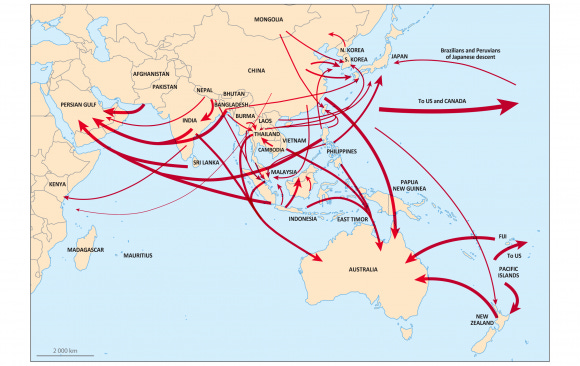
Given a map showing intra-Asian migration flows, identify two main migration corridors and discuss the reasons behind these patterns.
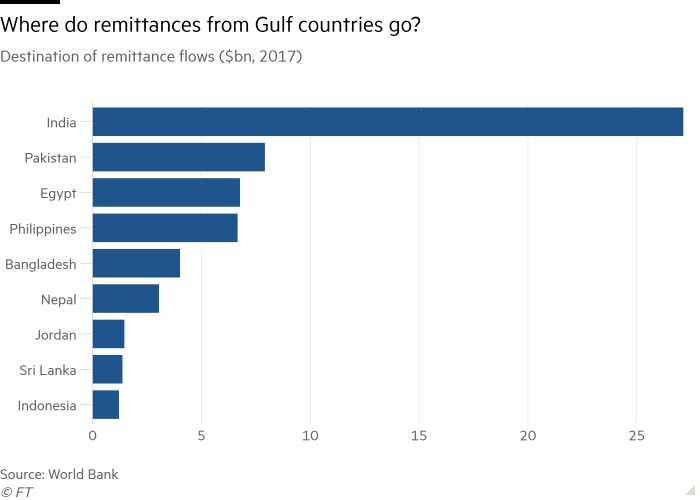
Study a chart showing remittance flows from migrant workers in the Gulf to South Asian countries. What economic impacts can remittances have on source countries?
Structured Essay Questions
“Climate change is expected to become a leading cause of migration in Asia this century.” Discuss with reference to specific countries or regions.
Examine the impact of internal migration on urban areas in at least one large Asian country.
Analyse the challenges faced by Asian governments in managing labour migration and protecting migrant rights.
Case Study/Source-based Questions
Using a case study (e.g., migration from the Philippines, Bangladesh, or Myanmar), describe the journey of migrants and the social effects on both sending and receiving communities.
Evaluate the social, economic, and political challenges associated with integrating migrant workers in destination countries such as Singapore, Japan, or South Korea.
How do diaspora communities support development in their home countries? Reference at least one Asian example.
Synoptic/Discussion Questions
“Migration in Asia is as much about opportunity as it is about necessity.” To what extent do you agree with this statement? Support your answer with examples.
Discuss how migration in Asia reflects broader global trends and why it is important for geographers to study these patterns.
A FREE downloadable revision sheet is available on the link below
Migration in Asia Revision Sheet
If you would like to support my resources scan the QR code below and Buy me a Coffee