

Deforestation in the Rainforest
Progress and New Challenges

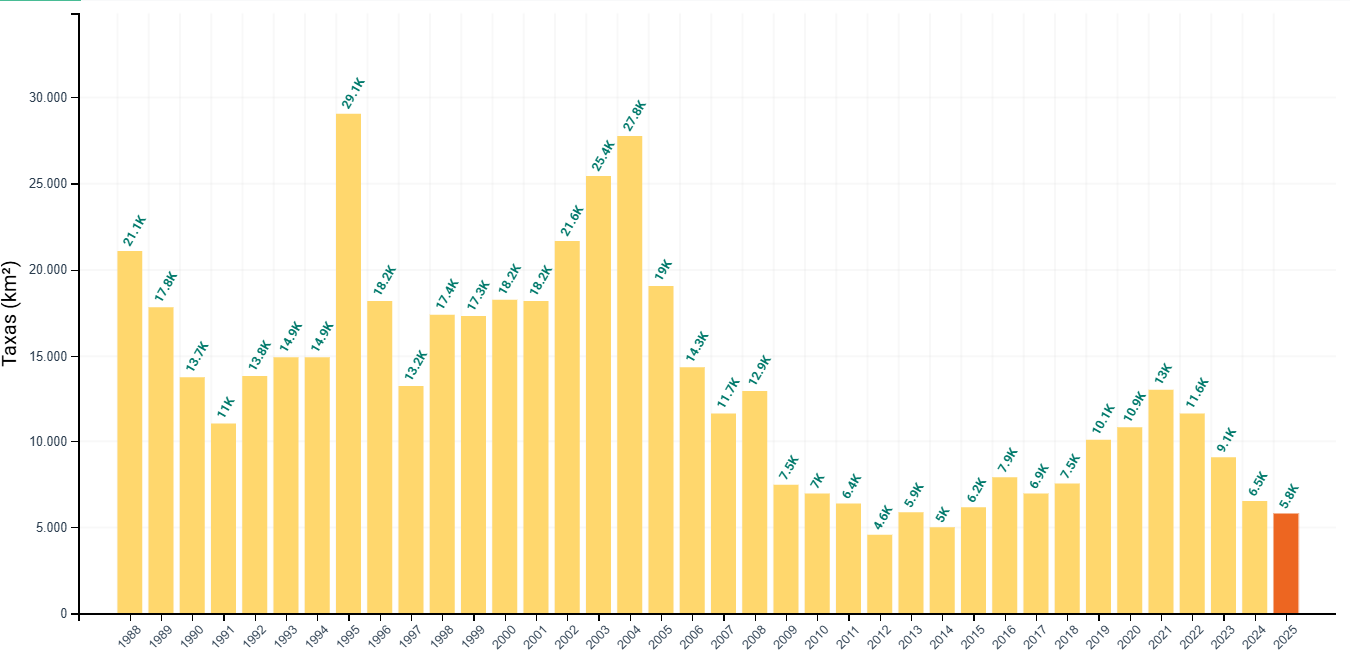
Deforestation in the Brazilian Amazon has dropped again in 2025. Around 5,800 square kilometres of forest were cleared this year — an 11% decrease from 2024 (PRODES, 2025).
This data comes from the PRODES program (Program for the Calculation of Deforestation in the Legal Amazon), which uses satellites to measure how much forest is lost each year. It also includes information from DETER, a system that sends rapid alerts when deforestation is happening.
Graph of the deforestation rate in the Legal Amazon over the years. Source: Inpe
Political Leadership and Change
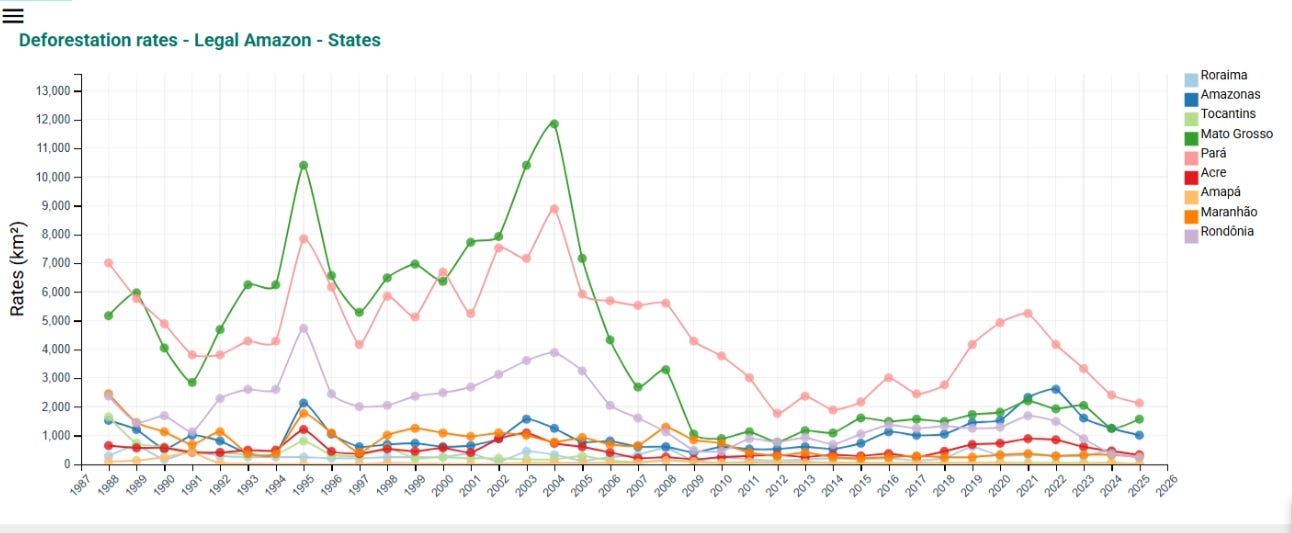
Brazil’s President Luiz Inácio Lula da Silva returned to office in 2023. Since then, deforestation has more than halved. During the previous presidency of Jair Bolsonaro, deforestation rose sharply. Bolsonaro’s government weakened protections for the environment, but Lula’s administration has strengthened them again through stricter monitoring and tougher penalties for illegal land clearing.
Deforestation rates tend to reflect political priorities quickly. Lula’s earlier time in office (2003–2010) also saw significant drops in forest loss. When Bolsonaro took over in 2019, deforestation increased again. Today, it is falling once more under Lula’s renewed efforts.
Key Conservation Policies
A major reason for recent improvement is the revival of Brazil’s Action Plan for the Prevention and Control of Deforestation in the Legal Amazon (PPCDAm). First created in 2004, this plan coordinates government action against illegal forest clearing. It was defunded in 2019 but restarted in 2023, helping reduce deforestation across the region (PPCDAm, 2023).
Wildfires and Forest Degradation
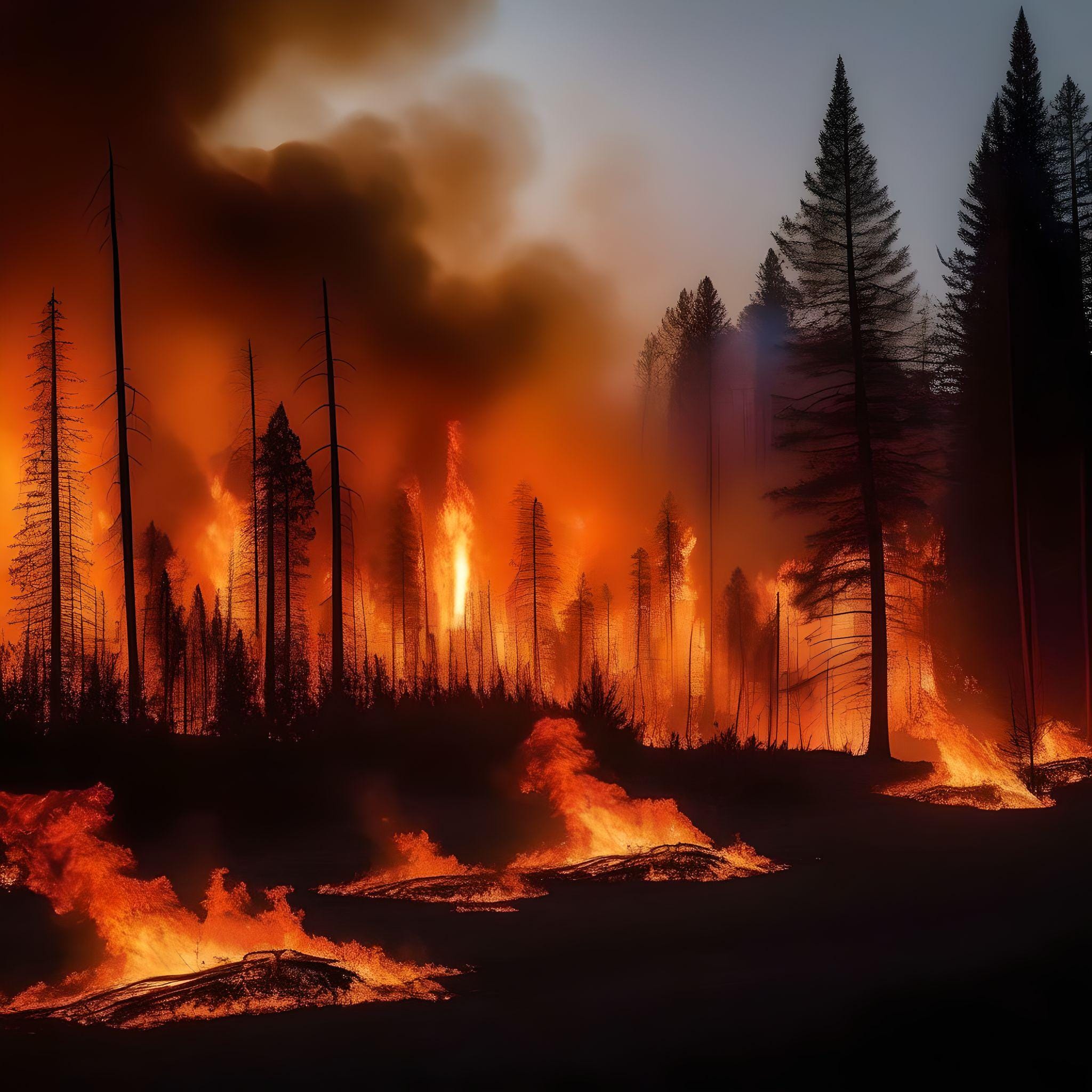
Even though less land is being cleared, the Amazon still faces serious threats. In 2024, large wildfires caused major damage to forest areas (Our World in Data, 2024).
These fires don’t always lead to complete deforestation, but they degrade forests — meaning trees become thinner, less healthy, and less resilient. Over time, this weakens the ecosystem and makes it harder for the Amazon to recover.
Continuing Challenges
The decline in deforestation is a positive step. However, the Amazon still loses vast areas of forest each year. Current rates are better than in recent years but not yet as low as during Lula’s first presidency. The long-term goal remains the same: to reduce deforestation to zero.
Looking Ahead: COP30 and Future Plans
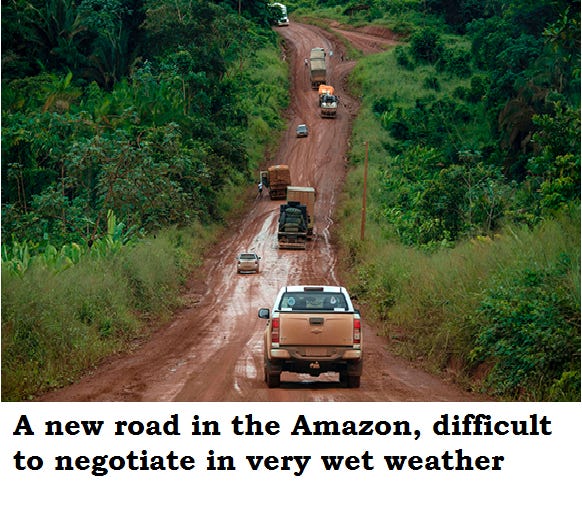
Brazil is host to COP30, the United Nations climate conference. Some reports suggest parts of the Amazon were cleared for new roads and infrastructure ahead of the event (BBC, 2025).
Officials say these plans were made before the conference was announced, but the timing has drawn criticism. While the cleared area is small compared with total forest loss, the symbolism is controversial — holding a climate summit while clearing forest nearby creates mixed messages.
Rainforest deforestation is not confined to the Amazon
Rainforest deforestation is not just a problem in the Amazon; it affects tropical forests across the globe. In 2024 and 2025, record-breaking deforestation has been reported in Southeast Asia, Central Africa, and other parts of South America. For example, Indonesia and Malaysia have seen their primary rainforest losses slow, but the Congo Basin, which contains the world’s second-largest rainforest after the Amazon, has reached its highest-ever rates of untouched forest loss. Agricultural expansion for crops like soy and palm oil, cattle ranching, illegal logging, and especially wildfires driven by climate change have been key causes. In Bolivia, forest loss has increased almost fivefold since 2020, driven by drought, fires, and policies promoting cash crops and livestock.
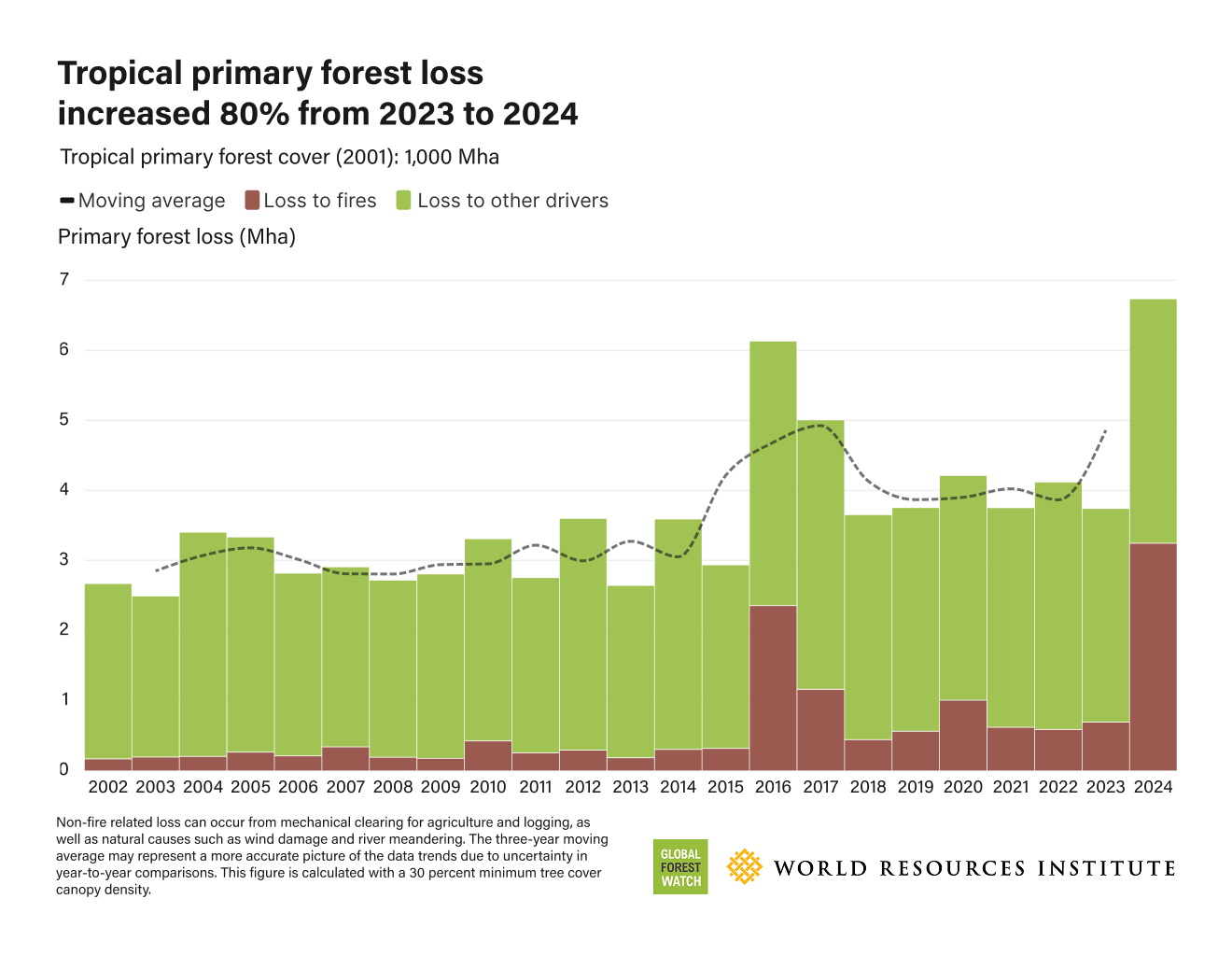
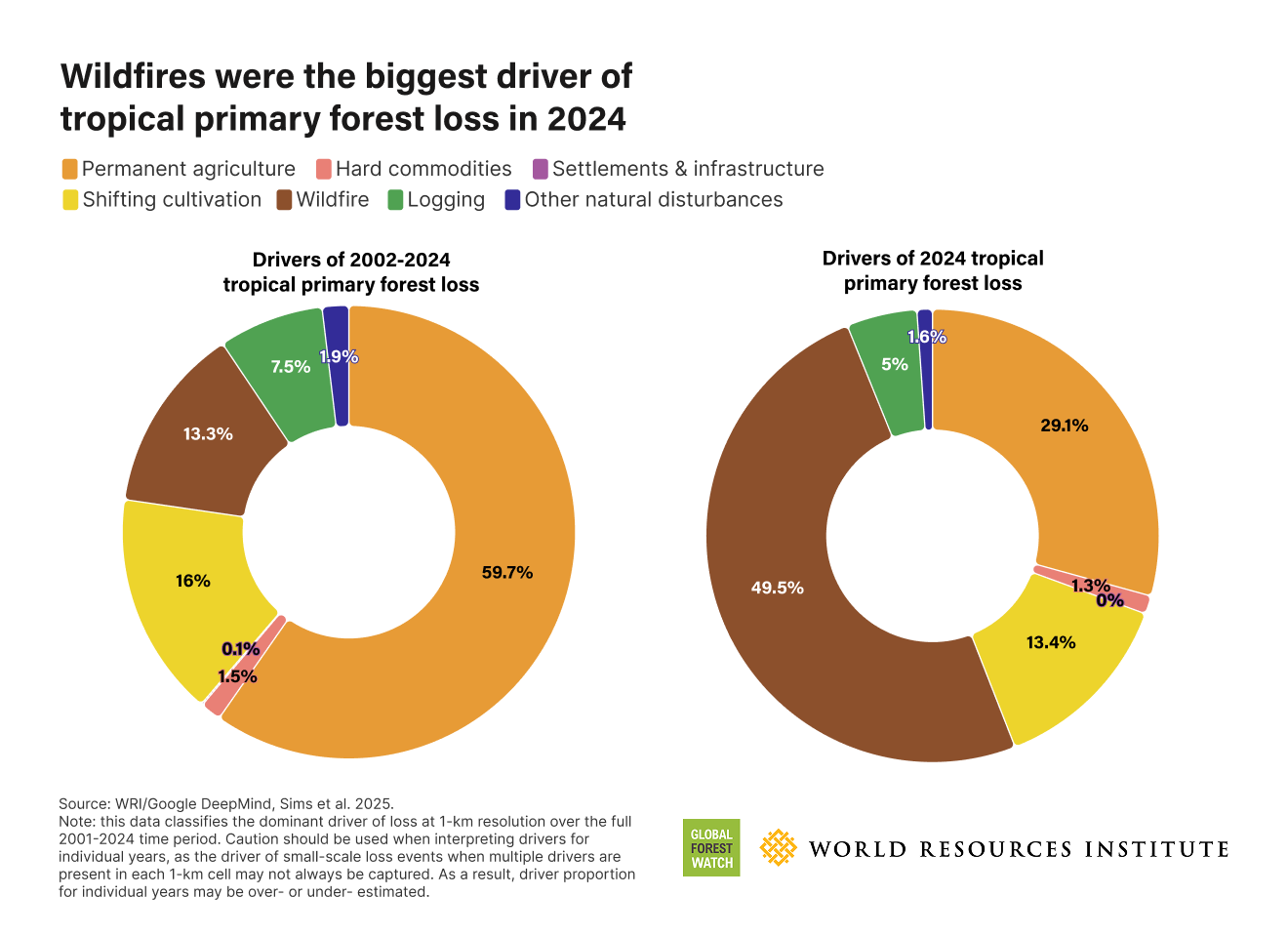
Globally, 2024 saw a sharp increase in wildfires, with some of the largest impacts outside of South America occurring in boreal and tropical rainforests of places like Canada and Siberia. Fire damage now accounts for nearly half of the total tropical forest loss worldwide, a record shift from past years where clearing for agriculture was the top threat. These wildfires, often started by people to clear land, are spreading further because of hotter, drier weather linked to global climate change. As a result, the planet lost the equivalent of 18 soccer fields of forest every minute, and the goals set by international agreements to halt deforestation by 2030 are far from being met.
References
PRODES 2025 Amazon Deforestation Data
Brazil - Deforestation Control Policies
BBC NEWS - Brazil prepaes for COP30
Rainforest deforestation through wildfires
Discussion and Reflection
Deforestation in the Amazon is improving but still a difficult issue. Changes in government policies, international attention, and natural threats like wildfires all affect the region’s future. Thinking about these facts can help students understand the importance of both politics and environmental action.
Questions for Students
Why do you think changes in leadership can have such a quick effect on deforestation rates?
What are the differences between deforestation and forest degradation?
Why is simply lowering deforestation rates not enough? What should Brazil aim for long-term?
How might wildfires, even if they don’t clear all the trees, still damage the Amazon’s environment and communities?
Do you think it is possible to balance new infrastructure (like roads) with protecting the Amazon? Why or why not?
These questions encourage you to think about cause and effect, and the challenges faced when trying to protect natural environments like the Amazon rainforest .
The Atmosphere and Climate Change
If you would like to support my resources scan the QR code below and Buy me a Coffee

Solid breakdown. The policy whiplash between Bolsonaro and Lula administrations shows how quickly political will translates into enviromental outcomes. That PPCDAm revival in 2023 after four years dormant is basically proof that enforcement infrastrucure matters more than abstract commitments. The COP30 timing irony is pretty rough tho, clearing forest to host a climate conference feels like the exact cognitive dissonace Brazil's trying to move past.