
Counter-urbanisation

Counter-urbanisation, also known as de-urbanisation, refers to the movement of people and economic activities away from major cities and into rural areas. This process represents a significant reversal of the traditional urbanisation trend that dominated the 19th and 20th centuries, where people migrated in large numbers from rural areas to cities in search of employment and opportunities. Counter-urbanisation has gained considerable prominence in recent decades, particularly in More Economically Developed Countries (MEDCs), as a response to various push and pull factors. This demographic shift has had notable and far-reaching effects on society, the economy, and the environment as rural populations increase and the character of these areas transforms.
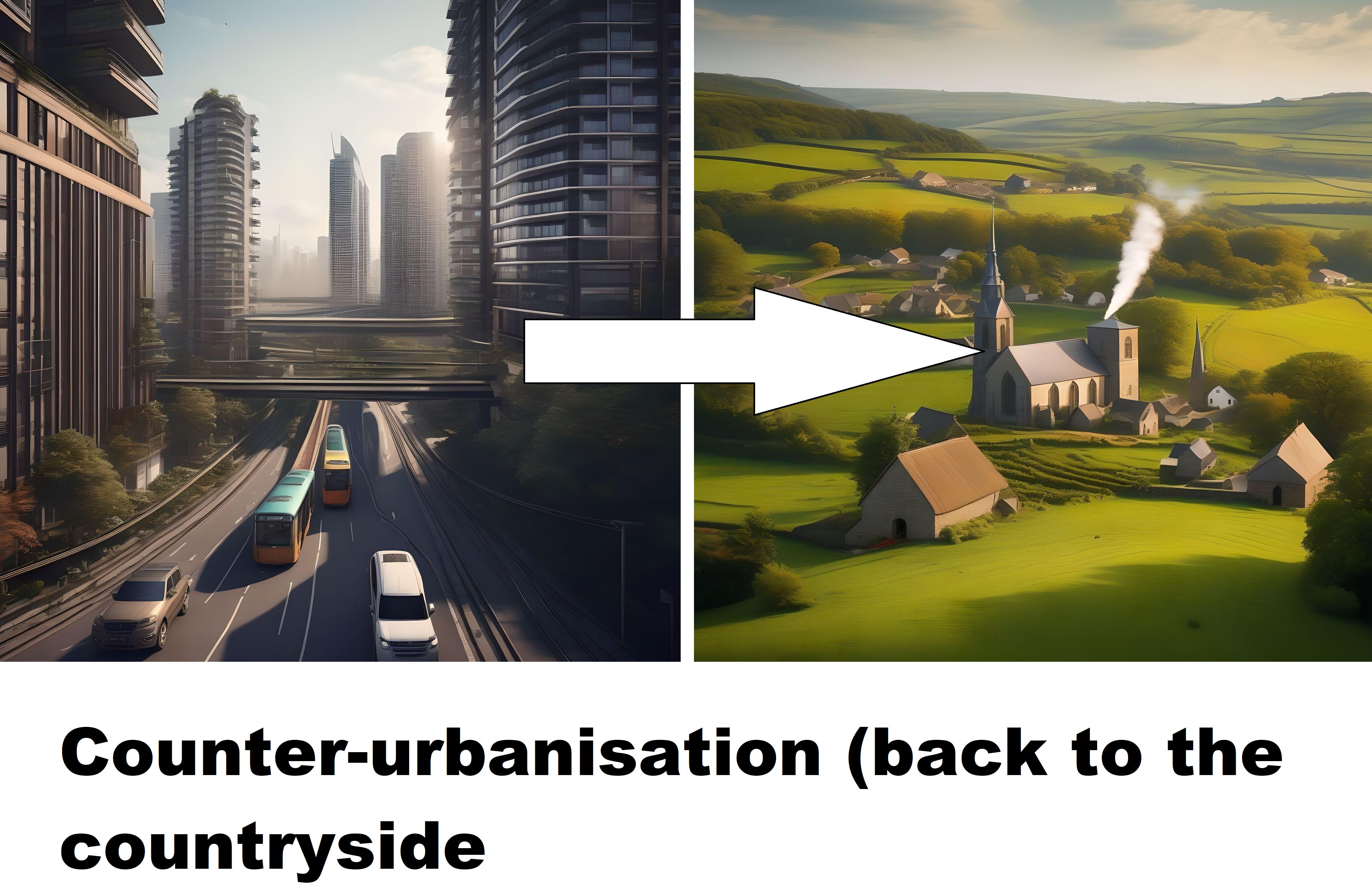
It is important to distinguish counter-urbanisation from the related process of suburbanisation, though the two are often interconnected. Suburbanisation occurs where the suburbs on the edge of urban areas grow outward into the surrounding countryside as people move from both the inner cities and also some rural areas. Suburban residents typically retain easy access to the services and employment opportunities that urban areas provide, while simultaneously increasing their access to open space amenities, larger properties, and quieter residential environments. This process creates a gradual urban-rural transition zone, often referred to as the rural-urban fringe.
Key Drivers of Counter-urbanisation
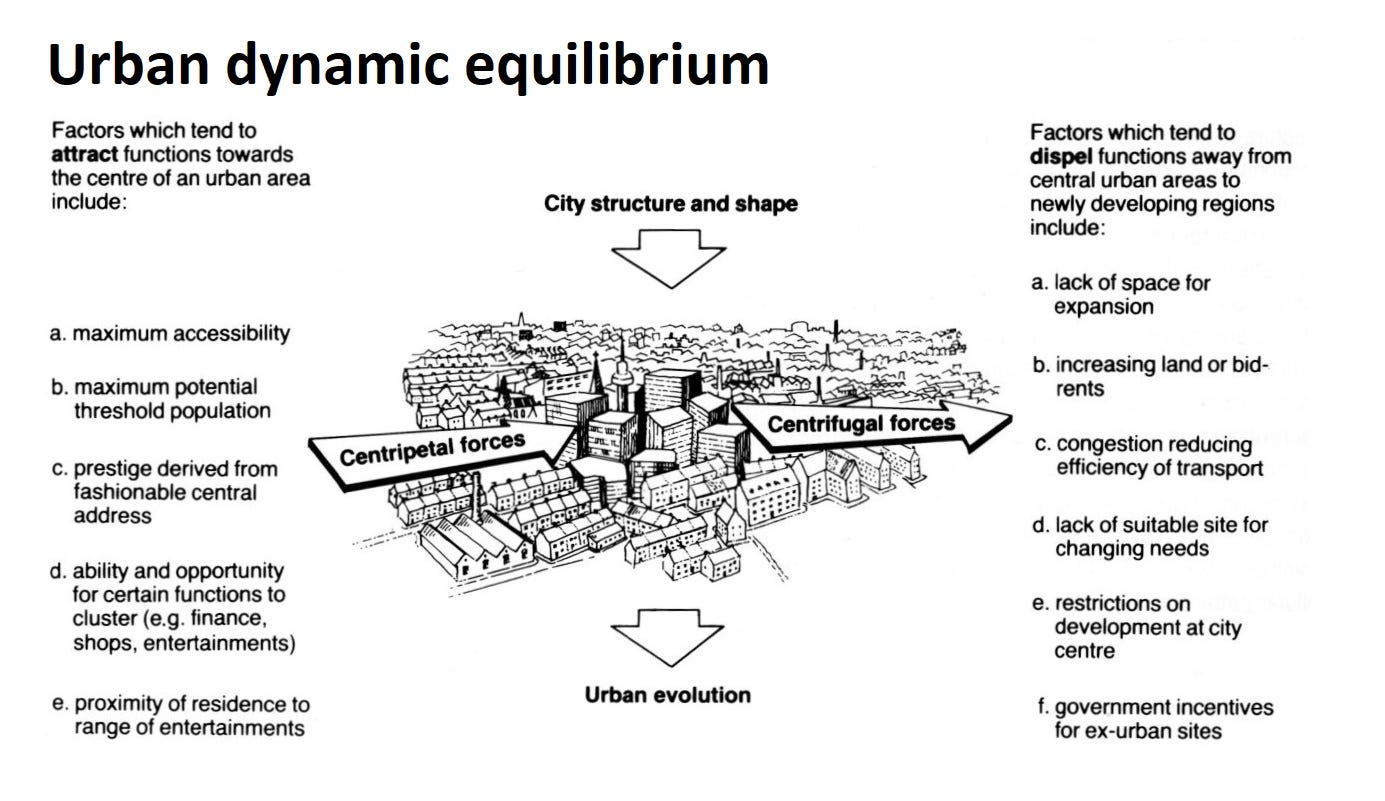
One of the primary drivers of counter-urbanisation is the desire for a significantly higher quality of life, which many people feel is increasingly difficult to achieve in major urban centres. As cities become progressively more crowded and face mounting issues such as severe traffic congestion, air and noise pollution, high levels of crime in certain areas, and escalating costs of living, including housing, some individuals and families actively seek alternatives outside of urban centres. They are particularly drawn to rural areas that offer a quieter, more peaceful, and less hectic lifestyle, with considerably more space for housing and gardens, cleaner and healthier environments with lower pollution levels, and closer connections to nature and the countryside. These rural and semi-rural areas often provide a stronger sense of community cohesion where neighbours know each other, lower crime rates that create feelings of safety and security, and better access to recreational activities such as hiking, cycling, and water sports. For families with children, rural schools are often perceived as offering smaller class sizes, better educational outcomes, and a safer environment compared to their urban counterparts.
Technological advancements and improved transportation infrastructure have also played a significant and enabling role in facilitating counter-urbanisation over recent decades. The development of reliable and efficient transportation networks, such as motorway systems, improved A-roads, and high-speed railway connections, has made commuting between rural areas and cities far more feasible, convenient, and time-efficient than in previous generations. Many rural residents now work in cities but choose to live outside them, creating a pattern of long-distance commuting. Even more significantly, the widespread availability of high-speed broadband internet and fibre-optic connections, along with revolutionary advancements in remote work options and digital communication technologies, has fundamentally enabled individuals to live outside urban centres while maintaining their employment in cities or working entirely remotely. This trend was dramatically accelerated by the COVID-19 pandemic from 2020 onwards, which normalised home-working and demonstrated that many jobs could be performed effectively without a physical presence in city offices. This has given workers unprecedented freedom to choose their residential location based on lifestyle preferences rather than proximity to their workplace.
Economic factors can also contribute substantially to counter-urbanisation, particularly for young families and those on middle incomes. Rising property prices and the high cost of living in cities, particularly in global cities and capital regions like London and the South East of England, can make homeownership and living expenses prohibitive or extremely challenging for many individuals and families. The average house price in major UK cities can be ten times or more the average salary, pricing many people out of the property market entirely. In contrast, suburban and rural areas often offer considerably more affordable housing options, whether purchasing or renting, and a generally lower cost of living, including cheaper goods and services, attracting those seeking more affordable alternatives while maintaining a decent standard of living. Additionally, the decentralisation of employment and the availability of job opportunities in suburban areas and market towns, such as business parks, industrial estates, office complexes, and retail centres, can incentivise individuals to move away from major cities while still maintaining stable and well-paid employment. Some businesses have deliberately relocated to rural areas to take advantage of lower operating costs, particularly land and premises costs.
Impacts and Consequences of Counter-urbanisation
Counter-urbanisation can have both positive and negative effects on society, the economy, and the environment, creating complex challenges for planners and policymakers. On the positive side, it can help alleviate significant population pressures in overcrowded urban areas, reduce traffic congestion and strain on public transport systems, and promote the development of smaller, more balanced, and potentially self-sustaining communities throughout a region or country. This more even distribution of population can lead to more balanced regional development. Counter-urbanisation can also contribute substantially to the revitalisation and regeneration of declining rural areas and villages that had previously experienced population loss and economic decline, leading to economic diversification beyond traditional agriculture, the preservation of local cultures, traditions, and heritage, and the maintenance of rural services such as shops, post offices, and pubs that might otherwise close. The influx of new residents often brings additional income and spending power to rural economies, supporting local businesses and creating employment opportunities.
However, counter-urbanisation also poses significant challenges that must be carefully managed. It can place considerable strain on existing infrastructure in rural areas that was designed for smaller populations, leading to increased and sometimes overwhelming demands for services such as schools, healthcare facilities, including GP surgeries and hospitals, public transportation, and utilities, including water supply and sewage systems. Rural roads not designed for heavy traffic can become congested, and pressure on local services can create tension between long-established residents and newcomers. The conversion of agricultural land, woodland, and greenfield sites into residential developments or commercial areas can have serious environmental consequences, including loss of biodiversity and wildlife habitats, increased surface water runoff and flood risk, and increased overall water and energy consumption as more housing is built. This can also lead to the loss of productive farmland that contributes to food security.
Additionally, counter-urbanisation can exacerbate spatial and social inequalities within society, as those with more financial resources, higher incomes, and professional occupations may have greater access to desirable rural living, while lower-income groups remain concentrated in cities or less desirable areas. This can lead to the phenomenon of “rural gentrification”, where property prices in attractive villages increase dramatically, pricing out local people, including young families who have grown up in the area, agricultural workers, and those on lower incomes. This can fundamentally change the social composition of rural communities and reduce social mixing. Furthermore, the influx of wealthier, often older or retired residents can alter the demographic structure of villages, potentially leading to the closure of schools due to fewer children and changing the character of communities.
Case Studies and Examples
Counter-urbanisation is particularly evident in countries such as the United Kingdom, where the growth of commuter villages in areas like the Cotswolds, the Lake District, and the Home Counties around London exemplifies this trend. In the United States, the movement away from major metropolitan areas to states like Montana, Idaho, and Vermont has accelerated in recent years. Post-pandemic data from the UK shows significant population growth in rural and coastal areas, with many individuals and families reassessing their priorities regarding work-life balance and residential location.
Conclusion
Counter-urbanisation represents a significant demographic trend involving the movement of people and economic activities away from major cities toward suburban and rural areas. It is driven by multiple interconnected factors such as a desire for a higher quality of life and improved living conditions, technological advancements in transport and digital communications, improved transportation infrastructure, and economic considerations, including housing affordability. While counter-urbanisation offers clear advantages such as a quieter, more peaceful lifestyle, access to nature and countryside, lower costs of living and housing, and opportunities for rural regeneration, it also presents substantial challenges related to infrastructure provision and capacity, environmental impact and sustainability, and social inequalities and community cohesion. Understanding these complex dynamics, their causes, consequences, and interconnections is crucial for effective urban and regional planning, enabling policymakers to ensure sustainable, inclusive, and balanced development that benefits both urban and rural areas while managing the environmental and social impacts effectively. As patterns of work and living continue to evolve in the 21st century, counter-urbanisation is likely to remain an important geographical process shaping settlement patterns and regional development across the developed world.
References
Champion, A.G. (ed.) (1989) Counterurbanization: The Changing Pace and Nature of Population Deconcentration - A foundational text on the topic
Pacione, M. (2009) Urban Geography: A Global Perspective (3rd edition) - Contains comprehensive chapters on urban-rural migration patterns
Halfacree, K. (2008) “To revitalise counterurbanisation research? Recognising an international and fuller picture” in Population, Space and Place - Available through academic databases
Journal Articles:
Mitchell, C.J.A. (2004) “Making sense of counterurbanisation” in Journal of Rural Studies, 20(1), pp.15-34
Boyle, P. and Halfacree, K. (1998) Migration into Rural Areas: Theories and Issues - Excellent for understanding migration theory
UK-Specific Resources:
Office for National Statistics (ONS) - Regular reports on internal migration patterns in the UK (www.ons.gov.uk)
Champion, T. and Shepherd, J. (2006) “Demographic change in rural areas” in Rural Economy and Land Use Programme - Available online
Online Resources and Reports:
Rural Services Network (www.rsnonline.org.uk) - Current data and reports on rural population changes
Centre for Cities (www.centreforcities.org) - Research on UK urban-rural migration trends
Examination style questions
Short Answer Questions (4-6 marks):
Define the term ‘counter-urbanisation’ and explain how it differs from suburbanisation. (4 marks)
Outline two push factors and two pull factors that encourage counter-urbanisation. (4 marks)
Explain why technological advances have facilitated counter-urbanisation in MEDCs since the 1980s. (6 marks)
Describe the main differences between counter-urbanisation in the UK and urbanisation in Less Economically Developed Countries (LEDCs). (6 marks)
Medium Answer Questions (9-12 marks):
Examine the social and economic impacts of counter-urbanisation on rural communities. (9 marks)
Assess the role of transport improvements in enabling counter-urbanisation in the UK. (9 marks)
Explain how counter-urbanisation can lead to rural gentrification and evaluate its consequences for local communities. (12 marks)
“Counter-urbanisation creates more problems than it solves for rural areas.” Discuss this statement with reference to specific examples. (12 marks)
Extended Answer/Essay Questions (15-20 marks):
Evaluate the extent to which counter-urbanisation has contributed to more balanced regional development in the UK. (20 marks)
“The COVID-19 pandemic has accelerated counter-urbanisation trends that were already underway.” To what extent do you agree with this statement? (20 marks)
Assess the environmental impacts of counter-urbanisation. To what extent can these impacts be managed sustainably? (20 marks)
Compare and contrast the processes of counter-urbanisation and re-urbanisation. Explain why both processes can occur simultaneously in the same country. (20 marks)
Data Response Questions:
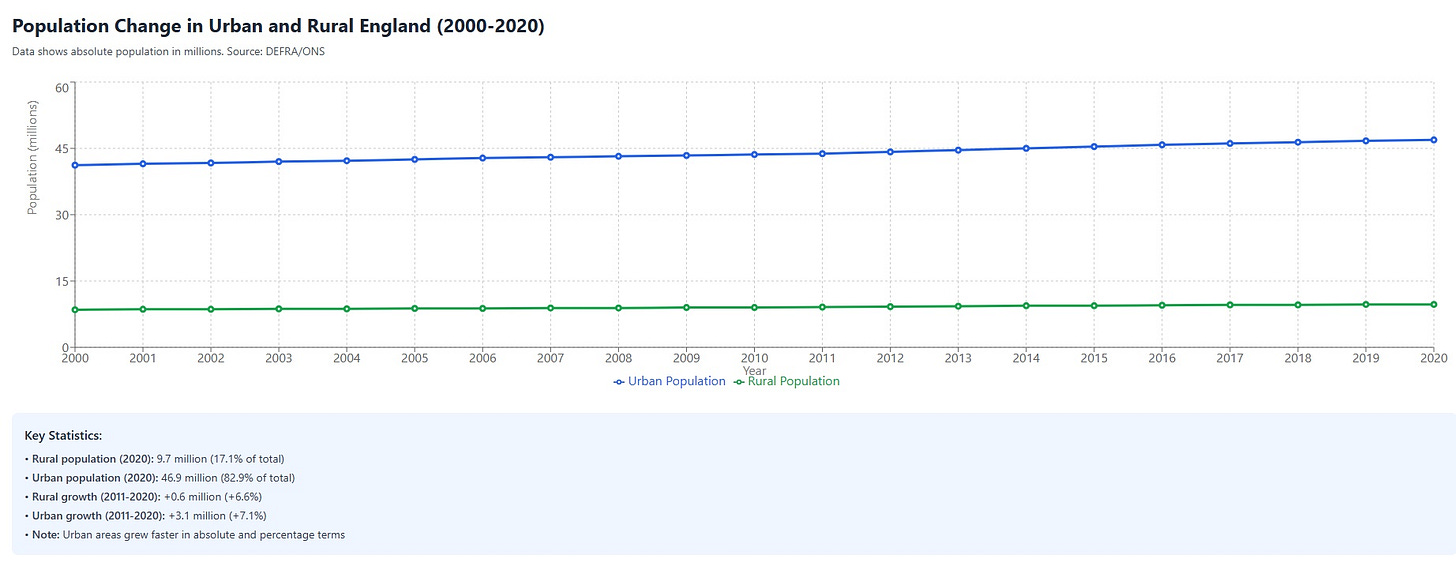
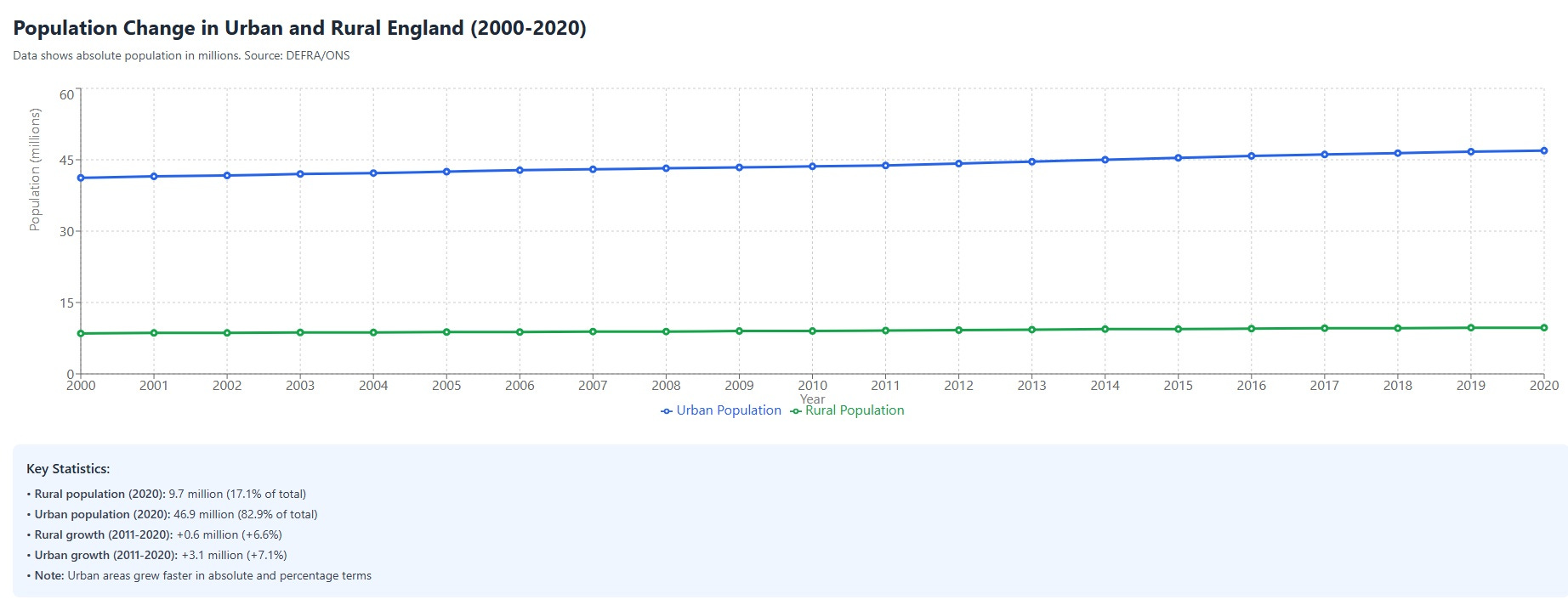
Study the graph showing population change in urban and rural areas of England between 2000-2020. a) Describe the trends shown in the data. (4 marks) b) Suggest reasons for the patterns you have identified. (6 marks) c) Evaluate the challenges these trends might create for planning authorities. (10 marks)
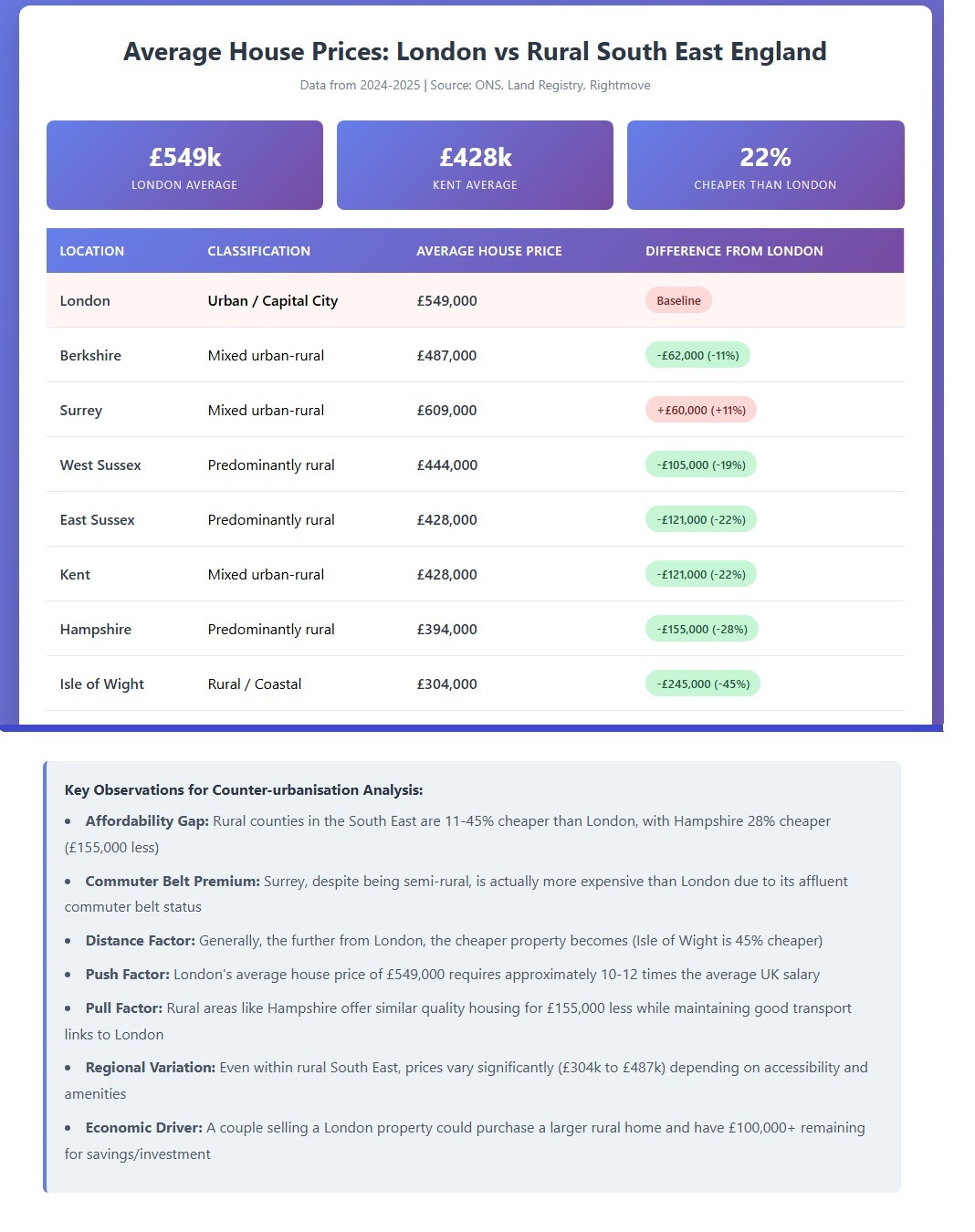
Study the table showing average house prices in London compared to rural counties in South East England. a) Calculate the percentage difference between London and the cheapest rural area shown. (2 marks) b) Explain how the data helps to explain patterns of counter-urbanisation. (8 marks) c) Assess whether economic factors alone can explain counter-urbanisation. (10 marks)
Case Study Questions:
With reference to a named rural area you have studied, examine the impacts of counter-urbanisation on that area. (15 marks)
Using named examples, evaluate the success of planning strategies designed to manage counter-urbanisation in rural areas. (20 marks)
Synoptic/Higher-Order Questions:
“Counter-urbanisation is simply a luxury available only to wealthy households in developed countries.” Discuss. (20 marks)
Evaluate the view that counter-urbanisation represents a fundamental shift in settlement patterns rather than a temporary trend. (20 marks)
To what extent is counter-urbanisation a sustainable pattern of population movement? Consider social, economic and environmental factors in your answer. (25 marks)
“Managing the impacts of counter-urbanisation requires a balance between protecting rural environments and accommodating new residents.” With reference to examples, discuss the challenges of achieving this balance. (20 marks)
Skills-Based Questions:
Suggest appropriate primary and secondary research methods you could use to investigate the impacts of counter-urbanisation on a village near your area. Justify your choices. (12 marks)
Design a questionnaire survey that could be used to investigate local residents’ attitudes toward counter-urbanisation in a rural community. Explain how your questions would generate useful data. (10 marks)
Tips for answering these questions:
Always use specific examples and case studies where possible
Include relevant terminology (pull/push factors, rural gentrification, rural-urban fringe, etc.)
Consider multiple perspectives (environmental, social, economic)
Evaluate and assess - don’t just describe
Use evidence to support your arguments
Consider both short-term and long-term impacts
Link to wider geographical concepts where appropriate
FEEL FREE TO BUY ME A COFFEE IF YOU LIKE MY FREE RESOURCES
or one of my inexpensive books at
Ritchie’s Books

Urban and Industrial Geography