

China's population problem

China’s Looming Demographic Challenge
China, home to over 1.4 billion people, stood as the world’s most populous country until recently surpassed by India in 2023. Its demographic trajectory, however, presents a mounting challenge that threatens to reshape the nation’s economic and social fabric profoundly. After decades of sustained population growth, which fueled rapid industrialisation and urban expansion, China is now encountering a steep demographic transition characterised by a rapidly aging population and a declining birth rate. According to the 2020 census, the fertility rate has plummeted to approximately 1.15 children per woman, well below the replacement level of 2.1. This decline is a direct legacy of the one-child policy implemented from 1979 to 2015, combined with evolving social and economic factors, including rising education and career aspirations, and increased costs of child-rearing. In 2022, China recorded its first population decline in six decades, with the total population shrinking by nearly 850,000, a trend projected to accelerate in the coming years.
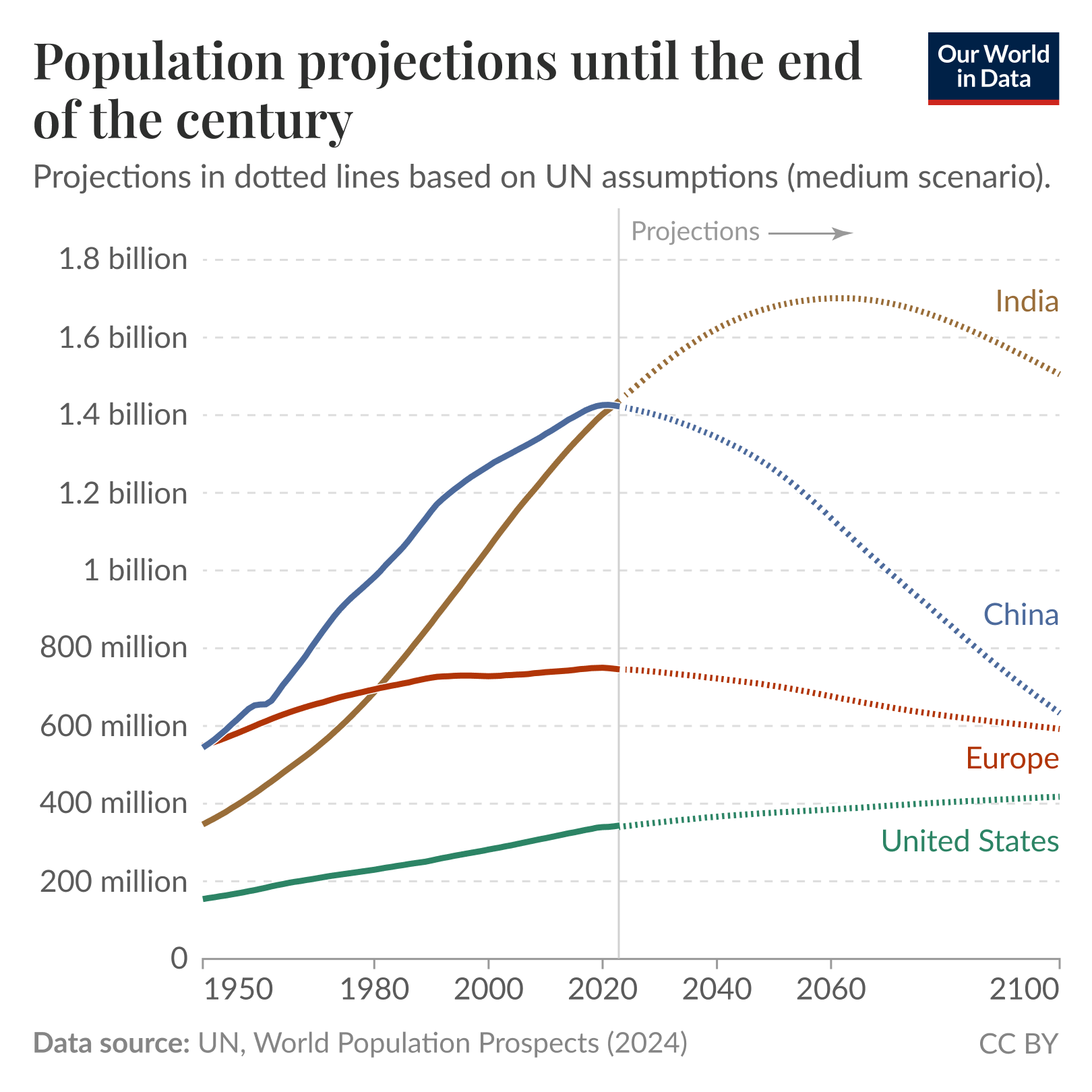
This demographic shift is generating far-reaching socioeconomic impacts: a rapidly shrinking workforce, increasing old-age dependency, and growing pressure on pension and healthcare systems. By 2050, it is estimated that nearly 40% of China’s population will be above retirement age, creating a dependency ratio unseen in modern global history. These changes come at a critical juncture as China transitions from an economic growth model reliant on abundant labour to one that demands higher productivity and technological innovation. Understanding China’s demographic outlook is key to anticipating not only its domestic challenges but also its role in the global economy and geopolitical landscape as it navigates this unprecedented population transition.
China is a vast and complex country with a population and urban landscape that often surprises many who only know of its well-known cities. Beyond iconic metropolises like Shanghai, Beijing, and Hong Kong, there are numerous other large urban centers such as Chengdu, Chongqing, and Xi’an. However, these cities do not yet command the same global recognition as New York, London, or Sao Paulo, highlighting the enigmatic nature of China’s urban geography.
The Overlooked Complexity of China’s Urban Environment
China’s widespread urban landscape consists of many large cities beyond the few internationally famous ones.
Cities like Chengdu, Chongqing, and Xi’an represent significant population and economic hubs but remain lesser-known globally.
The scale of China’s urban population and its rate of urbanisation are massive and continue evolving, shaping the country’s social and economic fabric.
Historical Context: The One-Child Policy and Demographics
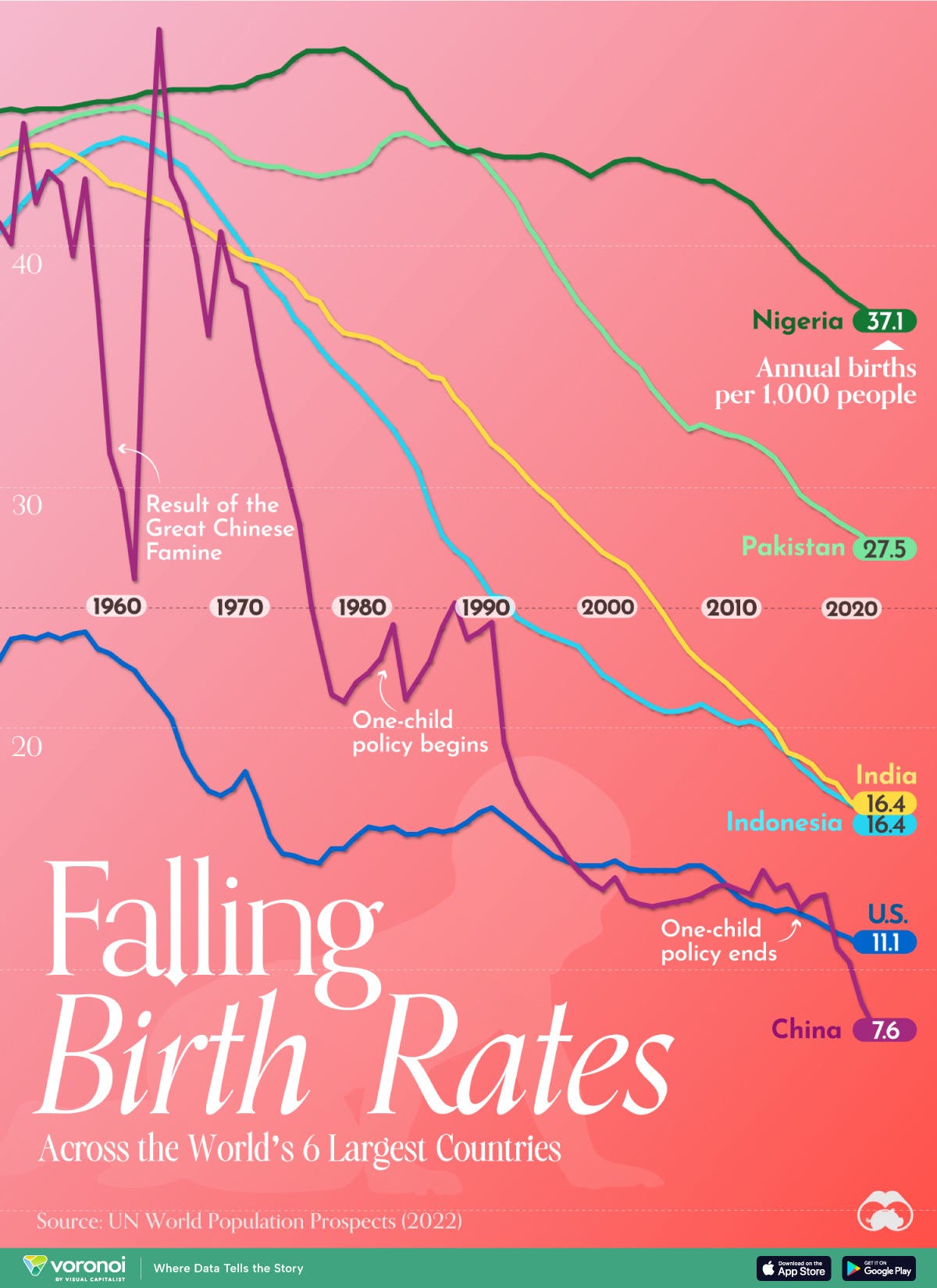
For decades, China’s population size was widely regarded as a key engine for its economic momentum. However, this enormous population also harbors a serious demographic dilemma, primarily a consequence of several decades of population control policies. Introduced in 1979, the one-child policy aimed to rein in population growth due to previous challenges like famine and widespread malnutrition. It succeeded in reducing birth rates drastically, but with unintended, long-lasting consequences.
Key effects include:
A sharp decline in fertility rates, currently at approximately 1.15 children per woman, which is significantly below the replacement threshold of 2.1 children needed to maintain a stable population.
The policy’s impact was compounded by socio-economic factors such as increased child-rearing costs, evolving social attitudes about marriage and family life, and a strong youth preference for education and career development.
Efforts to relax the policy—with a two-child policy in 2016 and then a three-child policy in 2021—have failed to reverse low birth rates.
In 2022, China experienced its first population decline in sixty years, a trajectory expected to intensify.
An Aging Population and Workforce Shrinkage
China’s demographic shift has resulted in a rapidly aging population and a diminishing workforce. This manifests in several critical ways:
Labour shortages are driving up wages and eroding China’s previous low-cost competitive edge in manufacturing.
Many manufacturing companies have begun relocating production to countries like Vietnam and Cambodia.
By 2050, almost 39% of the Chinese population is projected to be of retirement age, severely challenging pension and healthcare systems.
The dependency ratio—the number of non-working elderly per working-age individual—is rising, putting financial and social pressure on families and government systems.

Social Consequences and Gender Imbalance
Traditional family structures are under strain as fewer young people are available to support aging parents.
There is a growing demand for formal elderly care services, which remain insufficient.
Chinese officials are cognisant of the country’s mounting demographic crisis. Ning Jizhe, the director of China’s National Bureau of Statistics, stated, “The economic structure and technological development need to be adjusted and adapted” to accommodate the shrinking working-age population
A significant gender imbalance caused by the policy has left a surplus of men, triggering social challenges, including human trafficking and instability.
Policy Responses and Future Prospects
Government Measures to Mitigate the Crisis
The Chinese government has implemented several policies to encourage higher birth rates. These include:
Financial incentives for families.
Tax breaks to ease economic burdens.
Expanding access to childcare services.
Restricting access to abortions and vasectomies
Improving access to fertility treatments
Despite these efforts, results have been modest, suggesting that a more holistic, long-term approach is necessary.
Measures to mitigate declining fertility
Multifaceted Strategies for Sustainability
Experts argue that addressing China’s demographic challenges requires:
Comprehensive reforms in pension and healthcare systems.
Policies encouraging automation and productivity improvements to offset a shrinking labour supply.
Cultural shifts to value a balanced approach to population growth and family life.
The Uncertain Path Forward
Globally, nearly all countries with low fertility rates face similar hurdles, with no simple or proven ways to boost birth rates significantly.
China’s sheer population size means that any successful solution would be unprecedented in scale and scope.
Navigating these demographic transitions effectively will be crucial for China’s economic stability and social cohesion moving forward.
References for Further Reading
How Severe Are China’s Demographic Challenges?
“China’s New Action Plan to Boost Urbanisation,” China Briefing, August 2024, highlights urbanisation rates surpassing 66% and reforms in migration policy to support urban growth.
“Urbanisation in China,” Wikipedia (2025), provides detailed demographic statistics and trends on urban population growth and policy impacts.
“China pushes forward with people-oriented high-quality urbanisation,” China Government News, July 2025, focuses on the shift from scale expansion to quality and efficiency in urban development.
“China Population (2025),” Worldometer, for current population size and urbanisation statistics.
Sample Examination Questions
Knowledge and Understanding (Short Answer Questions)
Define the term fertility rate.
What was China’s fertility rate as of the 2020 census?
State two reasons for the decline in China’s birth rate since the late 20th century.
Identify one major policy responsible for China’s declining birth rate.
Outline one urban region in China that is significant but less internationally known than Shanghai or Beijing.
Application and Interpretation (Data and Context)
Using evidence from the text, describe the main characteristics of China’s current demographic transition.
Explain how the one-child policy has contributed to both economic development and demographic problems in China.
Why is the aging population considered a challenge for China’s workforce and economy?
What social services are under strain as a result of an aging population in China?
Explain how gender imbalance has become a social issue in China’s demographic profile.
Analysis and Discussion (Structured Response)
Analyse the link between China’s population policies and its current dependency ratio.
Discuss how China’s aging population could affect its position in the global economy by 2050.
Examine the potential impacts of ongoing rural-to-urban migration patterns within the context of a declining national population.
Evaluate the effectiveness of recent Chinese government measures to encourage higher birth rates.
Assess how China’s demographic transition might influence regional economic relationships in Asia, particularly with emerging manufacturing hubs like Vietnam and Cambodia.
Essay-Type Questions
To what extent can automation and technological innovation offset the economic effects of an aging and shrinking workforce in China?
Discuss the role of urban geography in understanding China’s demographic challenges, with reference to cities such as Chengdu, Chongqing, and Xi’an.
“China’s demographic crisis is as much a social challenge as it is an economic one.” Discuss this statement with reference to examples from the text.
Evaluate how China’s population policies reflect the tensions between state planning and social change in a rapidly modernising society.
Compare China’s demographic transition to that of another Asian country experiencing low fertility.
Population and Migration Book
If you would like to support my resources scan the QR code below and Buy me a Coffee

China is in a very dangerous position. By extension, the world is equally imperiled.
China is the primary manufacturing node, it fails, everything fails. China has confirmed 2022 through to now negative population growth. The current % decline equals 10% of Canada’s population per year, their absolute decline is -0.23%. This value should increase mathematically since their old population is larger than their young. More old die, the % total population declining would therefore increase.
China’s economy will struggle with rising dependency ratios and stagflation. The current financial landscape is built for increasing population growth. China will be one of the most interesting real life case studies of how the current economic paradigm can last. We are seeing the real effects of this now as the Chinese property market looks to have retraced all of its recent gains and some areas are seeing values that equal 2007 prices.
https://endtropy.substack.com/p/demographics-is-destiny-china?r=6xx7nz