

Changing Places
Mastering the Changing Places Topic

The “Changing Places” topic in A Level Geography is one of the most conceptually rich and intellectually stimulating areas of the curriculum. It challenges students to think beyond the physical geography of locations and explore how places are constructed, experienced, and transformed through human and natural processes. This guide will walk you through the key concepts, case study strategies, and exam tips to help you confidently tackle this topic.

What Is “Place” in Geography?
In everyday language, a place might simply be a location on a map. But in geography, the concept of place is far more nuanced. A place is not just a point in space—it’s a space imbued with meaning, shaped by human experiences, cultural representations, and physical characteristics.
Key Definitions:
Location: The objective coordinates of a place (e.g., latitude and longitude).
Locale: The physical setting where social interactions occur (e.g., a park, school, or shopping centre).
Sense of Place: The subjective and emotional attachment people have to a place.
Understanding these distinctions is crucial. For example, two people might experience the same location very differently based on their background, memories, or cultural lens.
Insider vs Outsider Perspectives
One of the most important ideas in Changing Places is the contrast between insider and outsider perspectives.
Insiders are people who feel familiar and comfortable in a place. They may live there, work there, or have strong emotional ties.
Outsiders are those who feel disconnected or alienated. Tourists, migrants, or even locals who feel excluded due to social or economic factors can be outsiders.
This distinction helps geographers understand how places can be contested and experienced differently by various groups.
Representations of Place
Places are represented in countless ways—through media, literature, art, advertising, and even social media. These representations can be formal (e.g., government statistics, maps) or informal (e.g., graffiti, blogs, films).
Examples:
A gritty urban neighbourhood might be portrayed in crime dramas as dangerous, while local residents may see it as vibrant and community-oriented.
Tourist brochures often present idealised images of places, omitting poverty or environmental degradation.


Understanding how places are represented—and who controls those representations—is key to analysing place identity.
How Places Change Over Time
Places are dynamic. They evolve due to a range of factors:
Economic change: Deindustrialisation, regeneration, gentrification.
Social change: Migration, demographic shifts, cultural diversification.
Environmental change: Climate impacts, natural disasters, conservation efforts.
Political change: Planning policies, investment priorities, governance.
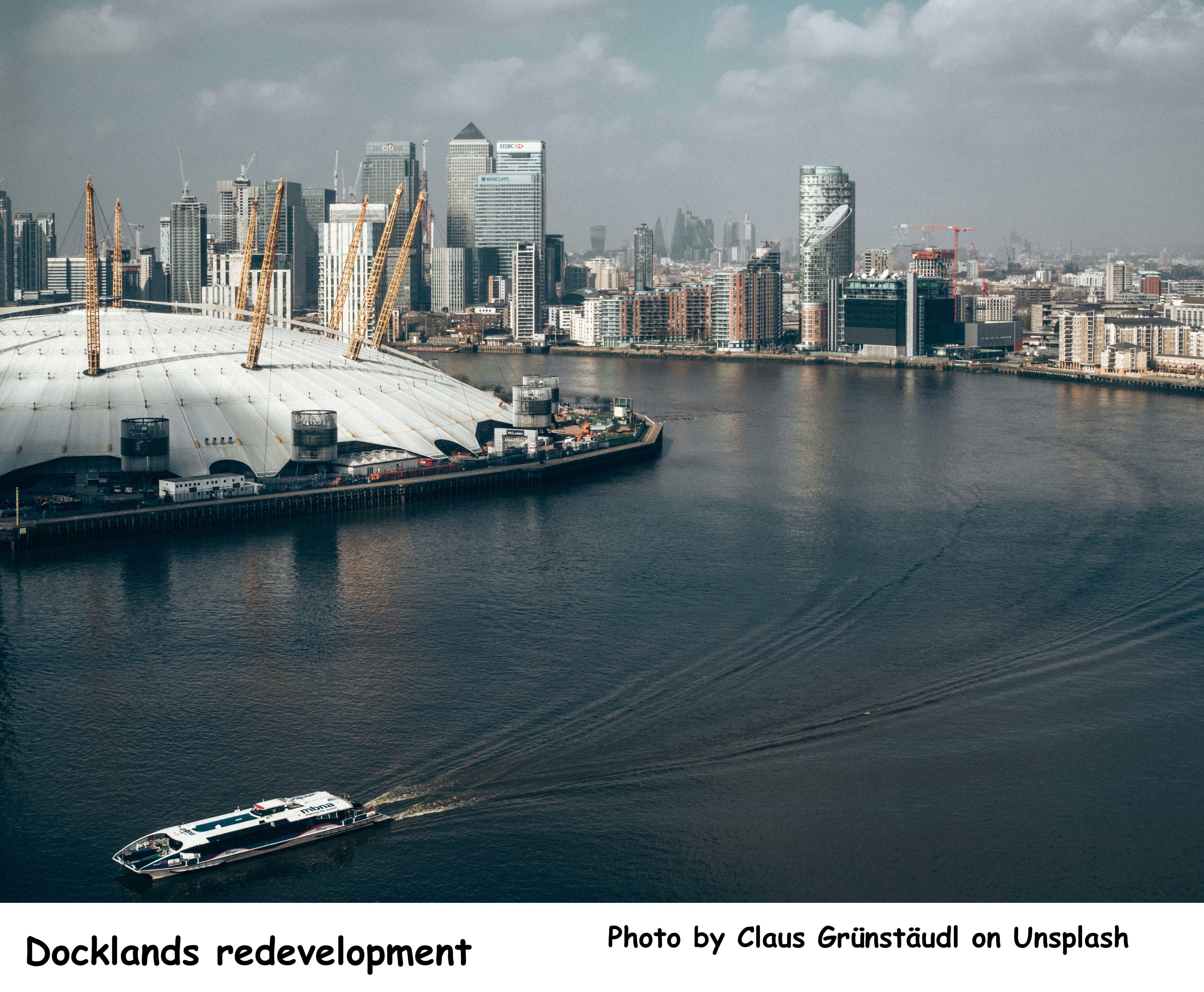
For example, the regeneration of London’s Docklands transformed a derelict industrial area into a financial hub, but also led to displacement and rising inequality.
Globalisation and Place
Globalisation has profoundly affected how places are connected and experienced. It can lead to:
Homogenisation: High streets across the world featuring the same brands.
Placelessness: A loss of unique identity due to global influences.
Local resistance: Movements to preserve local culture and identity.
Students should explore how global forces interact with local dynamics, creating tensions and opportunities.
Quantitative vs Qualitative Approaches
Geographers use both quantitative and qualitative data to study places.
Quantitative Data:
Census statistics
Crime rates
Economic indicators
GIS mapping
Qualitative Data:
Interviews
Photographs
Art and literature
Personal narratives
A strong answer in exams will often triangulate both types of data to build a nuanced understanding of place.
Near vs Far Places
This concept goes beyond physical distance. A “near” place might be geographically close but feel unfamiliar, while a “far” place might be emotionally close due to media exposure or personal connections.
Example:
A student in Scotland may feel emotionally close to New York due to pop culture, even if they’ve never visited.
Conversely, a nearby town might feel alien due to cultural or socio-economic differences.
This challenges simplistic notions of proximity and encourages deeper reflection on place experience.
Case Studies: Urban and Rural Change
Case studies are essential for illustrating theoretical concepts. You should study at least one urban and one rural example.
Urban Example: Stratford, East London
Stratford, located in East London, underwent dramatic transformation following its selection as the site for the 2012 Olympic Games. Historically, Stratford was a post-industrial area marked by economic decline, high unemployment, and poor housing conditions. The Olympic-led regeneration brought substantial investment in infrastructure, including the development of the Queen Elizabeth Olympic Park, Westfield shopping centre, and improved transport links such as the Jubilee Line and DLR. These changes revitalised the area, attracting new businesses, residents, and tourists. However, the regeneration also sparked debates around gentrification and displacement. Long-term residents expressed concerns about rising property prices and loss of community identity. The area’s representation shifted—from a neglected industrial zone to a symbol of modern urban renewal. Stratford exemplifies how place identity can be reshaped through investment and media portrayal, and how insider and outsider perspectives can diverge in response to rapid change.
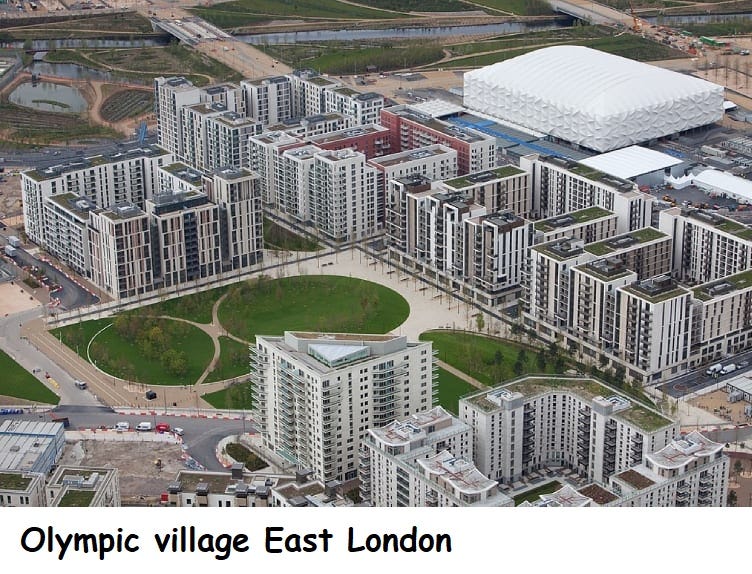
Before: Industrial decline, high unemployment, poor housing.
After: Olympic regeneration, new transport links, rising property prices.
Issues: Gentrification, displacement, changing community identity.
Rural Example: Powys, Wales
Powys, a large rural county in mid-Wales, faces unique challenges and opportunities in its development. Characterised by low population density, ageing demographics, and limited public services, Powys has experienced youth outmigration as younger residents seek education and employment elsewhere. This has led to concerns about sustainability and community vitality. In response, local initiatives have focused on promoting tourism, supporting agriculture, and enhancing digital connectivity to attract remote workers and entrepreneurs. Projects such as community-run shops, eco-tourism ventures, and broadband expansion aim to preserve rural identity while fostering economic resilience. Powys is often represented in media as a tranquil, scenic retreat, which contrasts with the lived experience of isolation and service shortages. The case highlights how rural places are shaped by both internal dynamics and external representations, and how local communities adapt to maintain a sense of place amid broader socio-economic pressures.
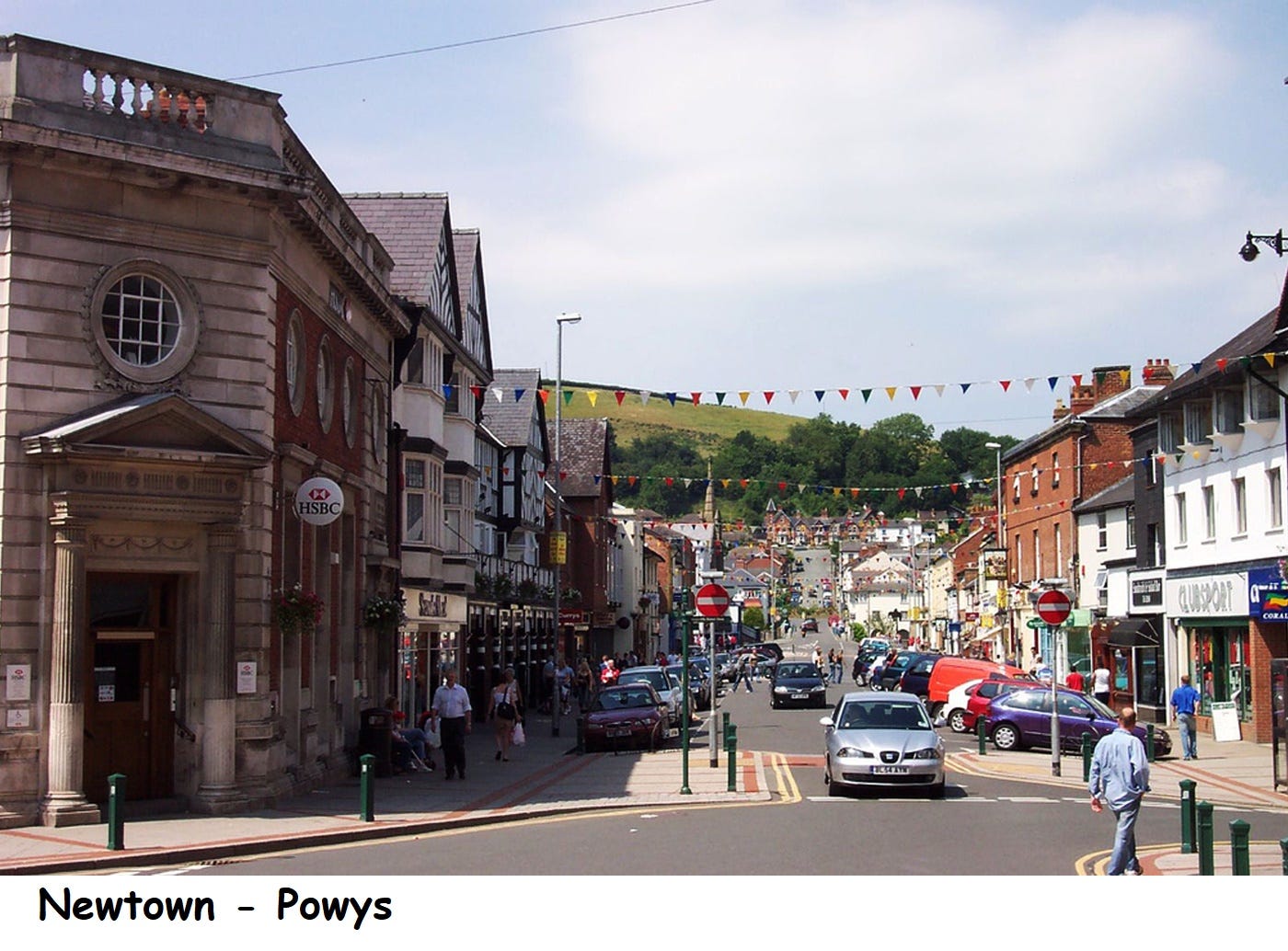
Challenges: Ageing population, youth outmigration, limited services.
Responses: Community-led initiatives, tourism development, digital connectivity.
Use these examples to explore themes like representation, insider/outsider perspectives, and the impact of policy.
Place Attachment and Identity
People form deep emotional bonds with places. This is shaped by:
Personal experiences: Childhood memories, family history.
Cultural identity: Language, religion, traditions.
Social connections: Friendships, community networks.
Place attachment can influence behaviour, such as activism to protect local environments or resistance to redevelopment.
Power and Place
Places are not neutral—they are shaped by power relations. Who gets to define a place? Who benefits from change?
Examples:
Developers may promote a “vision” of a place that excludes low-income residents.
Governments may prioritise investment in certain areas, reinforcing inequality.
Understanding power dynamics helps students critically evaluate place change and representation.
Fieldwork and Investigation
Fieldwork is a vital part of the Changing Places topic. It allows students to apply concepts in real-world settings.
Suggested Activities:
Mapping perceptions of place using surveys.
Analysing social media posts about a location.
Comparing official statistics with lived experiences.
Photographing and annotating urban/rural features.
Fieldwork should be reflective, critical, and linked to theory.
📝 Exam Tips
To excel in the exam:
Use Key Terminology: Include terms like “sense of place,” “representation,” “gentrification,” “placelessness,” etc.
Compare Perspectives: Show how different groups experience and represent places.
Integrate Data: Use both qualitative and quantitative evidence.
Apply Theory to Case Studies: Don’t just describe—analyse using concepts.
Structure Answers Clearly: Use paragraphs, signposting, and link back to the question.
Final Thoughts
Changing Places is a topic that invites curiosity, empathy, and critical thinking. It’s not just about memorising facts—it’s about understanding how geography shapes human experience. Whether you’re exploring your hometown or analysing a distant city, this topic helps you see the world through a more thoughtful and inclusive lens.
So next time you walk through a familiar street or scroll past a travel post, ask yourself: What makes this place meaningful? Who defines it? And how is it changing?
Useful Resource
Changing Places - Save my Exam
Sample Examination Questions
Short-Answer Questions (4–6 marks)
These test your understanding of key concepts and terminology.
Define the term “sense of place” and explain how it differs from “location.”
Outline two ways in which a place can be represented informally.
Explain the difference between an insider and outsider perspective of place.
Describe how globalisation can lead to placelessness.
Identify two qualitative sources that could be used to investigate place identity.
Data-Response Questions (6–10 marks)
These require interpretation of data such as maps, photos, or statistics.
Using a provided map and census data, analyse how demographic changes have affected place identity in a named urban area.
Examine two contrasting representations of the same place (e.g., a tourist brochure vs a newspaper article) and discuss how they influence perception.
Interpret a set of crime statistics and discuss how they might affect the lived experience of a place.
Essay Questions (15–20 marks)
These require deeper analysis, evaluation, and use of case studies.
“Places are socially constructed.” To what extent do you agree with this statement? Use examples to support your answer.
Evaluate the impact of regeneration on the sense of place in a named urban area.
Discuss how different groups may experience the same place in contrasting ways.
Assess the role of media in shaping the identity and representation of places.
Compare the lived experience of a near place and a far place, and evaluate how these experiences influence place attachment.
To what extent do quantitative data sources provide a complete understanding of place?
Essay-Specific Marking Breakdown
Essay Q9: “Places are socially constructed.” To what extent do you agree?
AO1 (Knowledge): Define “social construction of place”; explain insider/outsider perspectives, representation, and identity.
AO2 (Application): Use examples (e.g., Stratford, media portrayals, regeneration).
AO3 (Evaluation): Weigh social vs physical/environmental influences; consider different stakeholder views.
Essay Q10: Evaluate the impact of regeneration on the sense of place in a named urban area.
AO1: Define regeneration and sense of place.
AO2: Apply to a case study (e.g., Stratford, Salford Quays).
AO3: Evaluate positive vs negative impacts (e.g., improved infrastructure vs gentrification).
Essay Q11: Discuss how different groups may experience the same place in contrasting ways.
AO1: Explain insider/outsider perspectives, lived experience.
AO2: Use examples (e.g., migrants, tourists, long-term residents).
AO3: Evaluate how age, ethnicity, socio-economic status affect experience.
Essay Q12: Assess the role of media in shaping the identity and representation of places.
AO1: Define representation and media influence.
AO2: Use examples (e.g., Cornwall in tourism ads vs local reality).
AO3: Evaluate accuracy, bias, and impact on perception.
Essay Q13: Compare the lived experience of a near place and a far place.
AO1: Define lived experience, near/far places.
AO2: Use two contrasting examples (e.g., hometown vs global city).
AO3: Evaluate emotional familiarity, media influence, cultural ties.
Essay Q14: To what extent do quantitative data sources provide a complete understanding of place?
AO1: Define quantitative vs qualitative data.
AO2: Use examples (e.g., census vs interviews/photos).
AO3: Evaluate strengths and limitations of each; argue for mixed-methods approach.
Essay Planning Template Q9
Question: “Places are socially constructed.” To what extent do you agree?
🔹 Introduction
Define “social construction of place.”
Briefly outline your argument (e.g., agree to a large extent, but physical geography also plays a role).
🔹 Paragraph 1: Social Construction Through Representation
Explain how media, art, and narratives shape place identity.
Example: Stratford’s transformation through Olympic branding.
Evaluation: Representation can be selective or biased.
🔹 Paragraph 2: Insider vs Outsider Perspectives
Discuss how different groups experience places differently.
Example: Migrants vs long-term residents.
Evaluation: Subjective experiences vary widely.
🔹 Paragraph 3: Physical and Environmental Factors
Acknowledge the role of landscape, climate, and infrastructure.
Example: Rural isolation in Powys.
Evaluation: Physical factors influence but don’t define meaning.
🔹 Conclusion
Summarise key points.
State your final judgement on the extent of social construction.
Essay Planning Template Q10
Question: Evaluate the impact of regeneration on the sense of place in a named urban area.
🔹 Introduction
Define regeneration and sense of place.
Introduce your case study (e.g., Stratford, East London).
🔹 Paragraph 1: Positive Impacts
Improved infrastructure, housing, transport.
Example: Westfield, Olympic Park.
Evaluation: Boosts pride and accessibility.
🔹 Paragraph 2: Negative Impacts
Gentrification, displacement, loss of community.
Example: Rising rents, changing demographics.
Evaluation: Insider perspectives may be lost.
🔹 Paragraph 3: Media and Representation
Shift in how the area is portrayed.
Example: Stratford’s image in tourism vs local views.
Evaluation: Representation may not reflect lived experience.
🔹 Conclusion
Weigh positives and negatives.
Final judgement on overall impact.
Essay Planning Template Q11
Question: Discuss how different groups may experience the same place in contrasting ways.
🔹 Introduction
Define “lived experience” and “sense of place.”
Outline your argument.
🔹 Paragraph 1: Socio-Economic Differences
Wealth, education, and access affect experience.
Example: Urban regeneration benefiting some, excluding others.
Evaluation: Inequality shapes perception.
🔹 Paragraph 2: Cultural and Ethnic Identity
Language, religion, and heritage influence connection.
Example: Migrant communities creating new meanings.
Evaluation: Places can be inclusive or alienating.
🔹 Paragraph 3: Age and Life Stage
Young vs elderly experiences.
Example: Youth outmigration in rural areas.
Evaluation: Needs and values differ.
🔹 Conclusion
Reinforce diversity of experience.
Emphasise importance of inclusive planning.
To get much more detail on two contrasting cities look back at my previous Substacks on London and Sao Paulo - links below.
London
Brazil - Sao Paulo

Urban and Industrial Geography Book
If you would like to support my resources scan the QR code below and Buy me a Coffee

I'll admit I find this topic a little contrived for this level of examination, when there are other ways of examining student understanding of Human Geography. I wrote the post in response to a request from a subscriber and hope it helps teachers who find the topic a bit complicated.
Clear summary of a complex and esoteric topic for A Level students.